My Nephew Wants to Be an English Teacher
A MiddleWeb Blog
 My nephew approached me in the front hall of his parent’s house on Thanksgiving Day. He was home from college for the long weekend and consciously made a point of pulling me aside, away from the cacophony, to talk to me about something important.
I like that he can do that – that he feels comfortable seeking advice and a little life experience from his dad’s youngest sister.
“Aunt Mary, can I to talk to you for a minute?” We settled into the corner of the front hall, tucked away from the bustling kitchen. “I’ve decided I want to be a teacher. I was wondering what you thought about that.” He leaned his six-foot frame against the doorframe, awaiting my response.
What did I think of that? That’s a good question.
 As I looked at this young man, I could still see the toddler with the big blue eyes who discovered the meaning of “hot” when he touched the stove. I could still see the scruffy-haired teen sitting in the corner of his parents’ basement playing the ukulele, and I could see the mischievous young adult who chose to send me an incredibly inappropriate (but hilarious) text, in the middle of Easter mass a few years ago.
I can still feel his father’s eyes burning into the two of us, as we sat next to each other in the pew. I can hear my big brother, half-joking, half-not, as he leaned over and reprimanded us.
“You two are NOT allowed to sit next to each other in church any more.” This sent us into another round of quiet giggles. I’m reminded that I, too, can be “the bad kid in class.” This helps my teaching.
Now this same young man was standing there in front of me, and he had decided to become a teacher. What did I think of that?
At first, I was filled with a deep sense of excitement and joy for him. An indescribable happiness filled my chest. My career as a teacher has been an experience I would never want to give up. Simultaneously, however, I was feeling a slight sense of dread.
It wasn’t going to be an easy path. I knew this. There would be many moments of joy, but the road is also littered with ugly, negative emotions, moments filled with anxiety, indifference, sadness, embarrassment, self-doubt, resentment, and fear.
This is not what I told him.
I just smiled, because I had to. He had chosen well. If he decided to stay this course, he certainly had an adventure ahead of him.
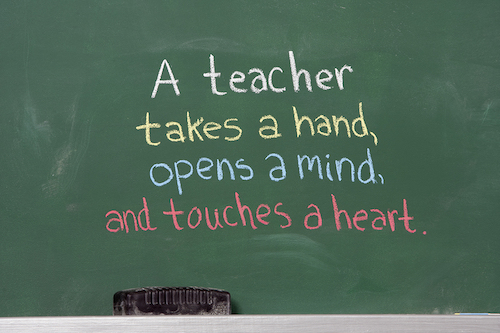
And he has the teaching fire. I saw it in his eyes that night. It takes more than fire, but you do need the fire. It stokes your creativity as a teacher. And sometimes you’re working with faintly glowing embers.
I did not tell him this either, but I imagine, at some point, we will discuss it. I look forward to that, because there are also innumerable, positive emotions that a teacher gets to experience each day, moments of triumph, hope, curiosity, heartfelt laughter, and amazement. There are innumerable moments of sheer joy.
The emotional side of teaching is one I struggle with on a daily basis. Some days are better than others, but in the long run, it is well worth it. I didn’t tell my nephew this either. He would begin learning about the emotional side of teaching as soon as he walked into his first classroom.
I think he’ll be an asset to the field of education. I think he’s really going to enjoy living this choice.
Teaching affectively
Recently, I came across an article in Educational Leadership, titled The Seven Habits of Highly Affective Teachers, written by Rick Wormeli. In his article, Wormeli discusses the emotional side of teaching, as he applies Stephen Covey’s premise from 1989, The Seven Habits of Highly Effective People, to our lives as educators.
 Wormeli identifies seven habits that define a successful teacher. These seven habits focus on the emotional health of our students, as well as our own emotional well-being as teachers. Wormeli’s habits are an unwritten and invaluable curriculum. They are our most important course of study.
The emotional well being of our kids has taken a back seat in today’s world of broad-scale testing and data-driven student performance assessment. These methods of inauthentic assessment do not factor in the most important thing in education, the whole child. The emotional well being of our learners directly affects their ability to learn. There’s no denying it.
Wormeli points out,
Anxious, overconfident, curious, indifferent, angry, amused, lonely, hopeful, embarrassed, empowered, afraid, excited, diminished – teachers have seen all these emotions emerge from students as they engage with classroom content.”
Not only have I seen each of these emotions in my students, I’ve seen them in myself, many occurring in a single school day. Our emotions are in the classroom with us. They can’t not be (as this remarkable video project reveals).
Wormeli’s fourth component of affective teaching is about ethics. He poses the question, “To what degree do we allow people untrained in teaching to tell us what to do?…What goes unlearned among our students when we play it politically safe?” He poses three sample dilemmas to help us “discover the energy that comes with candid exploration of ethical issues.”
Our emotional curriculum
Our job is to prepare our students to for the future, where they will also be asked to make real-world, adult choices. Applying what we teach them, they will make decisions involving ethics, empathy, compassion, ownership, forgiveness, and more.
One way we learn this is through the characters we meet inside and outside of literature. We are covering this emotional curriculum by looking at the circumstances of fictional lives and applying what we are learning outside of the pages of our books.
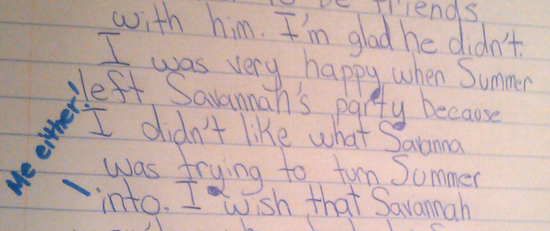
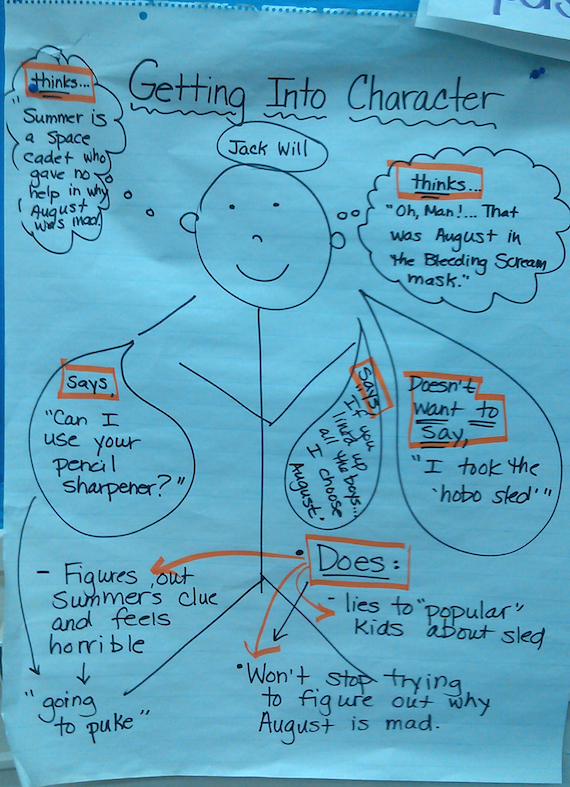 The students in my class are clearly learning how to explore this unwritten curriculum, and I am gaining much greater insight into each child’s emotional health. This couldn’t be more apparent than in the pages of their Reader’s Notebooks. These glimpses into the reality of each child, these peeks into their “emotional health,” these informal, untarnished pieces of data, are what I truly rely on to best understand each of my students.
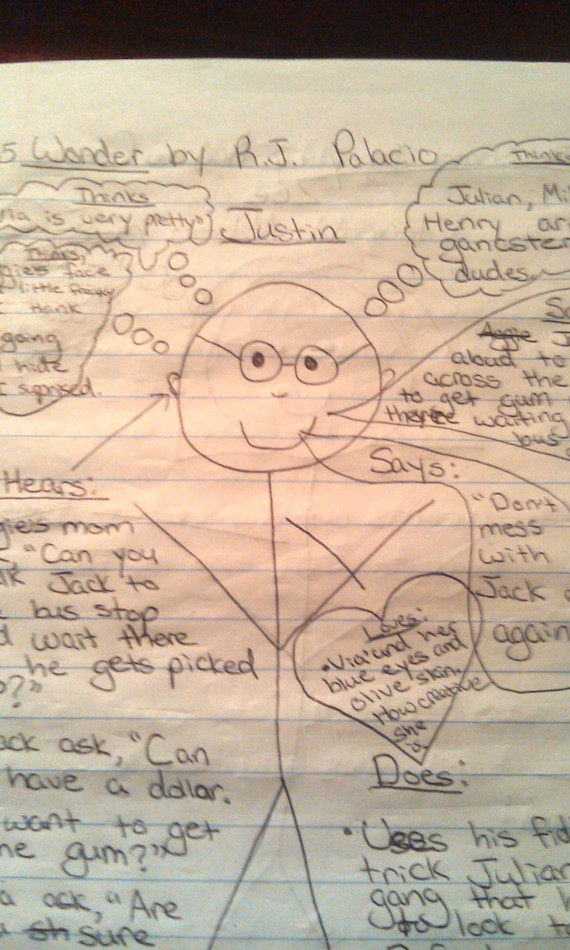 Writing is a difficult thing to “assess,” but the content of each child’s writing speaks volumes. The brief sense of dread I felt as I looked at the tall stack of spiral notebooks sitting next to me on the couch soon disappeared, as I picked up the one on the top, took a deep breath, and opened to the first page.
In my collection of resources, there are diagrams that show the organizational process behind paragraph unity, and other graphic organizers and sample written responses for the kids to use as guides for their own written responses. They all serve the same purpose.
They all help us relate to our characters and to each other. They help us to analyze thoughts and actions, to relate to others’ experiences, and to examine and evaluate the decision-making process, skills that might come in handy down the road.
There are a lot of “characters” in the real world (and in our class!). My hope is that, as 4T continues on its way, we will acquire an even greater ability to, as Wormeli reminds us,
Find joy in others’ success, cultivate perspective and reframe, ditch the easy caricature, explore the ethics of teaching, embrace humility, value intellect, and maintain passion and playfulness.”
 My nephew is choosing a career path that will be filled with every possible emotion I can think of. If he stays the course, I know he will be an affective and effective teacher. He has the fire in his eyes…and that’s where the path begins.
I can’t wait to see where it leads him.