10 Books to Keep Us at the Top of Our Game
A MiddleWeb Blog
 Welcome to fall! This is my 24th year as an educator. I can’t believe it’s been that long! The years just rolled by. I still so clearly remember the day I walked into Ken Swift’s first grade classroom as a student-teacher so ready to learn.
Over the years, I’ve learned it is almost impossible to teach and not learn as well. I’ve learned so much from students, colleagues, and the communities, and for 24 years I’ve stayed true to the vision of teacher (and now principal) as learner.
One way I’ve done that is to read all of the professional books I can. MiddleWeb has been instrumental in that! Did you know about the book review program MiddleWeb offers? You get new, high quality professional books FREE! In return you read them and review them for fellow educators. Take a peek at the program specifications here and some reviews here.
Some books just keep on giving
I have read many great new books through MiddleWeb’s review program and through other sources (yes, including my personal funds…haven’t we all?!)
But there are some books that I return to again and again. Oldies but goodies (and a few notable newbies) that continue to guide my work even though I may have first read them twenty years ago. As you move further into the new academic year, I want to share the 10 education books that have most impacted my work as an educator.
Rita’s Top Ten Edu-Books
1. Cooperative Discipline by Linda Albert
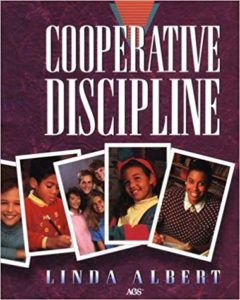 This is an amazingly helpful book to for teachers who want to improve their skills for helping students work through unwanted behaviors. I first read it in 1997. I had not had access to a classroom management course in my teacher preparatory program and was floundering. A friend recommended it, and it literally changed my life by keeping me in the classroom. Albert offers strategies to help teachers build a strong foundation of trust and mutual understanding upon which teachers and students can work together to develop rules.
More important to me, Albert teaches the four main student needs that, if not met, may result in poor behavior. She offers very practical tools to help teachers determine if a student is seeking attention, has a fear of failure, needs power, or in rare cases, is seeking revenge. Then Albert shares strategies for proactively meeting students’ needs before they misbehave. I re-read this book a couple of times a year for my first ten years in the profession and continue to consult it frequently.
2. The First Days of School by Harry and Rosemary Wong
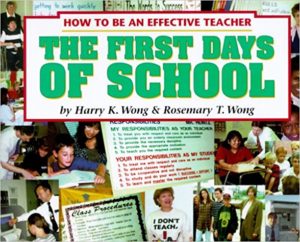 What Albert’s book does for discipline, Wong’s book does for classroom management. The book is an easy-to-read treasure trove of tips to help teachers of all grades and subjects learn to use procedures and routines to keep the classroom happy and hardworking.
This is another book that I have read and reread and read again. It had, however, been off my radar until recently when I found a copy at the local thrift shop, bought it and perused it again. I was amazed at how many basic but super-helpful ideas and strategies I had let slip from my practice. I shared that copy with several staff members and we all agreed, it’s a must read book for educators, if not the last word.
3. The Dreamkeepers by Gloria Ladsen-Billings
 First published in 1994, this is a stunning work that challenges teachers to rethink how we can help students of color, specifically African American students, succeed in schools. Ladsen-Billings followed teachers whose students excelled despite living in communities and attending schools where that was not the norm for children of color.
She observed with the goal of noting what made these effective teachers different and shared her findings, essentially giving birth to the notion of the importance of culturally relevant pedagogy. The book is written mostly in narrative format, is interesting, entertaining and instructional, and is still pertinent today.
4. What Great Teachers Do Differently and/or What Great Principals Do Differently by Todd Whitaker
 In these books the always insightful Todd Whitaker shares his long experience as an educator and researcher, distilling his years of observing successful teachers and principals into a list of best practices used by most.
Each example of what great teachers do is clearly explained, and none are “pie-in-the-sky” strategies. All are doable, and the books helped (and continue to help) me make goals for improvement for my professional practice (including in my new role as a principal).
5. When Kids Can’t Read by Kylene Beers
 For years I had been told that if children didn’t learn to read well by grade three all was lost. I always had my doubts that was true, but it wasn’t until I first read Beers’ book that I had the tools I needed to help middle grade, junior high, and high school students ameliorate reading difficulties to become proficient and even passionate readers.
Beers’ book is inspirational and practical. When I taught “struggling” readers in grades seven through twelve, I found her book to be invaluable. I still consult its treasure trove of strategies frequently.
6. Literacy Essentials by Regie Routman
 Really and truly, any book ever written by Regie Routman. I have eaten up every word she writes since my early college days. Literacy Essentials is her most recent book, and I have recommended it to every educator who is even remotely connected to literacy practices. I reviewed it for MiddleWeb here and wrote a summary of how it spoke to my teacher’s heart here.
The bottom line is that this book will help you improve your school’s literacy environment by helping you create an optimal culture for literacy learning through use of best practices, promoting equity, and helping students come to love reading and writing.
7. Visible Learning by John Hattie
 Hattie, an education researcher, does meta-analyses of meta-analyses. A “meta-analysis” is when researchers look at multiple studies on a given topic and aggregate the data to derive a single set of results. For example, if a researcher wants to know how effective a given teaching strategy is, the researcher looks at all of the available studies on it, and uses a statistical approach to combine the data in order to obtain an effect strength which, in very simple terms, is the probable impact a given strategy will have.
Hattie took available meta-analyses and meta-analyzed them! He published his original findings in a list of 252 influences on learning ranked by effect strength. The results (which he continues to refine) are at the very least interesting fodder for critical conversations about pedagogy. (There are LOTS of Visible Learning books growing out of Hattie’s work. Check out his page at the Corwin site. 10 Mindframes for Visible Learning: Teaching for Success is a recent book written specifically for teachers.)
8. Savage Inequalities by Jonathan Kozol
 Sadly, though Kozol’s book first appeared almost 30 years ago, most of the “savage inequalities” associated with access to quality education that he wrote about continue to ring true today. This book, like all of Kozol’s books, is easy to read, interesting, and informative.
He takes readers to some of America’s most impoverished communities with crumbling schools, limited technology, and a revolving door of leaders who have little positive influence. The stories are by turns inspirational and heartbreaking, and they will wake you up to the realities faced by many of our teachers, school children, and families.
9. First Aid for Teacher Burnout by Jenny Rankin
 Rankin is an education leader who loves and celebrates all things teacher. This book shares ideas and advice to help teachers stay healthy and happy in an age of increased workload and decreased pay and appreciation. You can find my detailed review of Rankin’s book for MiddleWeb here.
For me, reading it was truly a salve for my tired teacher-soul. I have shared it frequently and think it should be available in every school’s staff room.
10. Demystifying Data Analysis by Mike Schmoker
 Okay, this one isn’t a book. It’s an article and it’s even a short one. But, over and over again, I return to it for guidance and support. Schmoker wrote the article to help educators settle down the data frenzy by not making it overly complicated. I often talk to teachers who feel they need more training to analyze student data. But the truth is, the best data is often the most user-friendly data.
Schmoker reminds me to keep it simple and when I look at data to keep two questions in mind. One, are students succeeding in the subjects I teach? Two, within those subjects, what are the areas of strength or weakness? By focusing on these two questions, I can set goals that will truly impact student achievement. No talk of stanines or standard deviations needed! (You’ll find Schmoker’s latest ASCD book here.)
What’s on your Top 10 list?
Not only am I interested to know what you think about my list, I am curious to hear what would be on yours. Please share your thoughts on the best education books in the comments. If you don’t have time to mention 10, just mention a couple. Or just one! Be sure to tell us why. We’re all looking for great books to help us stay at the top of our game.
In the meantime, happy reading!













What a great collection of books! (and big thanks for including me – I’m super honored). This is such a great list for educators to follow (filling in the gaps as needed – e.g., I’m excited to read Demystifying Data Analysis by Mike Schmoker for the 1st time; I love reads that turn traditionally-overcomplicated issues simpler!), and would be great for educator book clubs to follow. Thank you for yet another superb and helpful post!
Your book is AMAZINGLY helpful, Dr. R! I can’t wait to hear what you think of Schmoker’s article.
Thank you! :-))) …and OMG, I just finished Schmoker’s article and tweeted it out. Fantastic! It’s so true what he said of how data experts typically over-complicate things: “The experts’ tendency to complicate the use and analysis of student achievement data often ensures that few educators avail themselves of data’s simple, transparent power.” I love that. What a refreshing read! Thanks tons for the recommendation! :-)
You are welcome! It resonated with me too! Hugs!
xoxo!!