Responding to Bullying and Cyberbullying
On October 10, 2012, a 15 year-old Canadian girl, Amanda Todd, killed herself after enduring physical and cyber bullying for years. Earlier in 2012 a Cincinnati TV station interviewed 5th and 6th graders who recounted being bullied and mentioned the option of suicide to escape the torment. These are sobering facts.
While adolescent suicides are rare and often have other causes, bullying is a major concern for schools and parents, and, of course, for students themselves. Over 25% of middle schoolers reported being bullied in a 2011 CDC study of Massachusetts students. A 2009 national study from the U.S. Office of Justice Programs noted that bullying peaks in the middle grades and reported slightly lower rates for elementary children (p. 5).

National Bullying Prevention Month each October brings extra attention to the issue and provides an opportunity to gather resources to use throughout the year. Among the resources are ideas for blending prevention concepts into the daily classroom curriculum. In a 2010 Education Week post, teacher Kathie Marshall wrote “Helping Students Get Proactive About Bullying.” She recounted her sixth graders’ responses to a persuasive writing unit on bullying and the growth in their awareness and willingness to intervene.
The PACER Center, which advocates for children with disabilities and is funded by the DoE’s Office of Special Education Programs, originated National Bullying Prevention Week in 2006. In 2010 PACER and its partners, including the National PTA, the NEA, and the AFT, expanded the advocacy effort to a month.
 PACER offers free resources including online toolkits, a website for younger kids and another one for teens, and an online petition students can sign to support bullying prevention. PACER also provides information on bullying of students with disabilities — both about the effects on the students and the options for educators, parents, peers and the disabled children themselves.
PACER links to organizations that explain and provide resources to support LGBT students. Included is the Trevor Project, a national program of crisis intervention for LGBTQ youth which grew out of a 1998 film about a 13 year-old who was bullied when he had a crush on a boy. PACER also recommends the extensive resources of the Gay Lesbian & Straight Education Network. Among GLSEN’s anti-bullying resources is the ThinkB4YouSpeak guide created with the Ad Council. The guide for MS and HS teachers provides activities on the impact of bullying language and the option for students to move from bystander to ally of the bullied.
For teachers who want to understand what their LGBT students are thinking, GLSEN suggests a publication from What Kids Can Do, ‘Queer Youth Advice for Educators: How to Respect and Protect Your Lesbian, Gay, Bisexual, and Transgender Students.’ It’s a PDF of comments from 30 students, clustered around themes.
The US Government’s “Stop Bullying” website from the Dept. of HHS defines bullying, outlines who is at risk and how they are affected, and provides information for schools on how to engage students and parents, create policies, train staff and students, build a safe school environment and tackle cyberbullying. Concise information is available at the site, without users having to follow links to other websites. The school site includes a cautionary PDF about some popular strategies that have drawbacks.
 Eyes on Bullying, a site developed by the Education Development Center, Inc., provides a free and elaborate toolkit on bullying, with activities, role-playing scenarios, and strategic planning steps. The Children’s Safety Network, a project in EDC’s Health and Human Development Division, offers research on bullying. One study looks at bystander intervention among 10-15 year olds. Findings suggest three key factors that encourage intervention: kids’ awareness of the immorality of bullying; kids’ awareness of adult expectation that kids will intervene, and the availability of training in how bystanders can intervene.
Access a succinct study of how adults see bullying. A major conclusion: What expert and non-expert adults view as bullying differs. The survey report is available from the C.S. Mott Children’s Hospital National Poll of Children’s Health.
The Association for Middle Level Education provides free access to several articles on bullying.
Bob Sullo, a consultant with three decades in schools as a teacher, administrator and school psychologist, blogged at Inspiring Student Motivation about his interactions with a boy sent to the office for bullying and about avoiding treating students who have been bullied as victims. In a 2010 article for the Virginia Education Association, Sullo describes the motivations of bullies and explains why he chooses the role of educator rather than punisher in responding to children who bully.
Principals will find guidelines for answering parents’ questions about bullying in a PDF from the National Association of Elementary School Principals. The NAESP also provides a one-page report to distribute to parents on what they can do at home. The American Association of School Administrators also offers guidelines for districts dealing with bullying and cyberbullying in a 2010 document accompanied by multiple links.
 For recent findings on bullying and responses to it, visit the C-Span recordings of the Department of Education’s 2016 anti-bullying summit. You will find videos on studies from other federal departments, universities and organizations on youth who bully, bullying and suicide prevention, youth leadership, and diversity. Not surprisingly, middle school students figure in the studies. Writing about an earlier annual Department of Ed. summit, Sean Slade looks beyond the individual bullying incident to the school culture in “Bullying Prevention Summit: Peers Matter” at ASCD’s Whole Child Education site. He points out that adults understand the impact of bullying on those who are bullied and have a clear responsibility to decrease bullying, in part by training bystanders.
Annmarie Urso, PhD, who has worked in K-12 special education and now teaches at SUNY in Geneseo, urges educators to go beyond teaching about intolerance and to actively support kids who are targeted by bullies. Writing in 2011 for Leadscape, the cognitive coaching site, she lists recent examples of racial bigotry, and suicides among LGBT youth, and provides links to resources to build support for targeted students, including Teaching Tolerance from the Southern Poverty Law Center.
Edutopia offers current bullying prevention resources: articles, videos, discussions, toolkits and more.
Cyberbullying
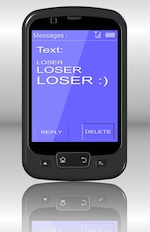 Cyberbullying, whether it originates at school or elsewhere, is a complex issue that impacts the lives of many young people. A free digital issue of ASCD’s Policy Priorities provides articles on what educators need to know about cyberbullying. The issue includes an infographic on states’ cyberbullying laws, links to curriculum resources, and a discussion of legal concerns. Particularly helpful is the video, How to Identify, Prevent, and Respond to Cyberbullying, presented by Justin Patchin, an associate professor at the University of Wisconsin, Eau Claire, and co-director of the Cyberbullying Research Center. Common Sense Education provides a useful resource, Standing Up, Not Standing By: An Anti-Cyberbullying Toolkit for Educators. Also check out cyberwise from Diana Graber and Cynthia Lieberman.