
Thank a Teacher – and Their Families Too!
 By Debbie Silver
We often hear slogans such as, “If you can read this, thank a teacher.”
But so often we forget to say, “And also thank the people who love and support those teachers every day.”
Great educators don’t exist in a vacuum. More often than not they are supported by loved ones who also play a part in the accomplishment of a teacher’s daily miracles.
Spouses, children, parents, and other family members are often overlooked when applauding the success of a teacher, but theirs is an important role and should not be taken for granted.
The Spouse or Significant Other
Spouses and significant others are sometimes the unsung heroes of the education world. They understand there is no tired like the end-of-the-term exhaustion, and there is no madness like Sunday night’s “I’ve got-to-get-organized-boogie.”
Supportive partners hold us when we cry over a student crisis and cheer when we talk about the successes of our strugglers. They function as the voice of reason when we rage about sending that letter of resignation — “Tonight, because I am right, and They are wrong!”
 I learned in my first marriage that living with someone who doesn’t get what it means to be a teacher puts way too much strain on the teaching partner. Comments like, “I don’t know why you’re so tired – you’re off every day by 3:00,” and “Save your classroom stories for your teacher buddies,” let me know I had no backing from my spouse.
I remember looking longingly at teachers whose partner showed up at PTA meetings just to help stack and unstack chairs. I was more than a little covetous of spouses who offered to cook dinner or run to the store for supplies to help their teacher partners. I heard stories that some of them sat for hours listening to school minutiae while at least pretending to be interested.
It finally happened for me. We hadn’t been dating long. I was presenting a workshop for elementary teachers at a National Science Teacher Association conference, and he agreed to accompany me to help carry my many materials.
 As I set up for my presentation, I realized I was one volunteer short for my “Hanimals” demonstration. I grabbed my guy, rolled up his sleeve, and started painting his forearm and fist with green paint. I glued two doll eyes on his knuckles and quickly gave him directions for how to squat behind the table, hold his arm over the top, and wriggle it around during a reading of The Very Hungry Caterpillar.
As I watched my tie-wearing businessman boyfriend trying his best to share space behind the table with the teachers who had volunteered to do the other book characters, I knew he was the man for me.
I later married that caterpillar-modeling suitor. Not only did he support what I did, he became quite enamored by the wonderful world of teaching. After spending time with a lot of us educators, my former business owner boyfriend decided he had missed his calling. He went back to school and earned the credentials to become a teacher himself. It’s good that I already had the understanding about how to support his “teaching habit.”
We need to offer a special note of thanks to those who live with, love, and reinforce teachers.
The “At Home” Children
It is often hard for children at home when the parent is a teacher who has spent the day engaging and challenging other peoples’ kids. The parent may be exhausted and just not ready for more “guess what” stories or providing supervision of tedious homework. The kids at home have to hear about how wonderful the teacher is at school, but they sometimes wonder why their parent can’t be that way all the time at home.
 Teachers’ kids have to deal with a lack of privacy afforded to children who have parents in the middle of everything that goes on at school. They have to share their parent’s time and attention with other kids at sporting events, school activities, and even community happenings. Extremely introverted kids often don’t like the limelight that comes from accompanying their teacher parent to a restaurant or the grocery store where everyone wants to have a word with the teacher. I know my sons made this objection as well as others.
My boys often complained that their Christmas and birthday presents were ruses for my own desires to confiscate the gifts later on for re-use at school. Okay, I’ll admit that as a middle level science teacher I tended to buy science gadgets and models I knew might accidentally find a home in my classroom after the recipient seemed to lose interest.
There were those meal critiques, too. Occasionally I would throw something in the oven so I could distract my kids into thinking I was busy making something homemade for dinner when actually I was catching up on school work. But at least they eventually got their dinner of boxed macaroni and cheese topped with my special gourmet touch – sliced weinies. And, yes, sometimes breakfast did consist of pop tarts and orange-flavored Kool-Aid served in the car because I had to get to school early to run off papers. (I hasten to add that they are all now adult men making excellent healthy eating choices.)
 And, of course, there was the snake thing. During school breaks I brought all my animals home for a little TLC. Four of my five boys were terrified of my python and my rat snake.
They absolutely hated having reptiles housed in glass containers in the utility room. I’m not sure they have yet forgiven me for the trauma I caused them even though I felt having snakes served the greater good of teaching my students.
Yes, it’s hard being a teacher’s kid, and we don’t tell them often enough how much we appreciate their many sacrifices.
Parents of Teachers
Ask the parents of most teachers, and they will tell you how proud they are of the important career their children have chosen. Many will brag to relatives, neighbors, and friends about the posterity being influenced by their offspring. Some, however, go much further than that. They act as volunteer tutors, field trip chaperones, and reading partners.
I have always envied the new (and sometimes veteran) teachers who show up with one or more of their own parents to help them get settled in. Their support team is there with fabric, a hot glue gun, scissors, poster paper, and markers to help with decorating. They come to haul heavy objects, put together furniture, stuff folders, wipe down desks, and do all sorts of helpful tasks to support their teacher sons and daughters.
 One teacher I know tells the story of a time her students were being exceptionally snarky, so she called her mom and put her on speaker phone. She told her mom how her class was acting, and she asked her mom to help. Her mother then proceeded to “dress down” the troublemakers and told them how disappointed she was in them for treating her baby so rudely. She informed them that she was not above getting dressed and coming up there to straighten things out. The teacher hung up the phone and was greeted by drop-jawed pre-adolescents who mumbled their apologies and cut out the horse play.
Most importantly, it is generally the parents who by example or by positive comments provided the first spark of interest their children had for becoming teachers. Many times, the parents helped finance the college degree(s) it takes to become a part of this field. For those parents we need to say thank you loudly and often.
Who Do You Need to Thank?
There are others who individually and collectively help teachers do the important jobs we have to do. Friends, siblings, and other relatives routinely step up, reach out, and lend a hand. We are better at our jobs because of them.
Perhaps it’s time to recognize those often-overlooked individuals. Who is it that helps you be your best? Please write and share stories about how you and/or your school show them how much they are appreciated. Let’s hear it for our families.
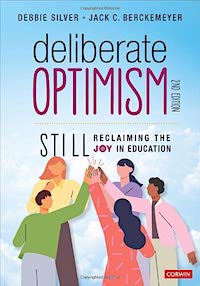 Dr. Debbie Silver is a learning consultant and humorist with over 30 years of experience as a teacher, staff development facilitator, and university professor. As a middle grades classroom teacher, Debbie won numerous awards including the 1990 Louisiana Teacher of the Year award. She speaks worldwide on issues involving education and is a passionate advocate for students and teachers. She is the author and co-author of several bestselling books, including Deliberate Optimism: Still Reclaiming the Joy in Education 2nd Edition.














I like this article. It makes me sad, because I do not have the supportive spouse, but I can definitely see why one is important.
Yet another teacher challenge-unless your spouse is actively trying not to support you, he or she needs to be taught how to support you. After 30 years, mine now helps with great pleasure but those early years were rough until I figured out that I needed to teach my support team just like I needed to teach my kids.