How You Can Write Perfect STEM Lessons
A MiddleWeb Blog
 TEACHER: I’m trying to design a STEM lesson. I just don’t have a clear picture of what to do.
I’ve heard that statement a time or two, and I work with teachers to try to answer it. Like most challenges you face, there’s no magic formula, but I’ll share a list of tips I try to remember when I’m writing STEM lessons.
This is not a comprehensive list (despite my MiddleWeb editor’s fanciful title for this post). But it’s a pretty good starting place as we strive to make our lessons as “perfect” as we can. You’ll notice that that while many of these tips are specific to STEM lessons, some are applicable to traditional lesson planning as well.
Take a look and see if you find ideas to add to your lesson design kit.
Ask yourself . . .
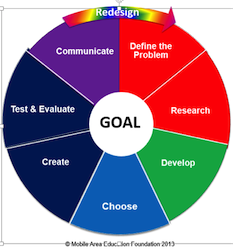 1. Does my STEM lesson use an engineering approach as a framework for the lesson? This is a non-negotiable for STEM lessons. The engineering design process (EDP) provides an organized approach for solving STEM challenges. Recall that this process involves a set of steps that go from defining a problem to creating and developing a final solution. The “E” in STEM is a key difference between traditional lessons and STEM lessons. Note that your lesson doesn’t have to follow the steps of the EDP in lock-step order. Engineers frequently jump back and forth between the steps, and going back to earlier steps is common.
2. Does my STEM lesson apply actual math and science content through authentic experiences? In other words, does the lesson incorporate the objectives your students are learning in a given quarter? This helps students understand why what they are doing in these subjects is important and how it relates to possible future careers. In your STEM lesson, connect and integrate the content from math and science courses.
You may need to collaborate with other math or science teachers to get insights into how these can be integrated. (Best case scenario: you are writing lessons for a truly integrated curriculum involving the arts and language arts. Join forces with those teachers as well.)
 3. Does my STEM lesson deal with real world issues and problems? STEM lessons don’t deal with imaginary problems such as aliens from outer space. They address real social, economic, and environmental situations in their local and global communities. See Real World STEM Problems for some suggestions on types of problems middle schoolers might focus on.
4. Do my STEM lessons immerse students in hands-on inquiry and open-ended exploration? STEM teachers use inquiry-based, firsthand investigations that encourage critical thinking, problem solving, and teamwork. The lessons are not prescriptive. Do not give students step-by-step instructions to follow to get an answer or solution. Kids have plenty of opportunity to muck about and discover their own possible solutions.
5. Do my STEM lessons allow for multiple right answers? Stem lessons stress that there’s no single right answer. STEM challenges generally have several (or many) possible right solutions. To reiterate a point I made in #4: Allow students plenty of freedom to do research, explore possibilities, and generate ideas for solutions.
6. Do my STEM lessons engage students in working in teams? Productive teamwork is a leading skill the kids we teach will need in the 21st century workforce. Place students in teams to communicate, think together, share ideas, and develop solutions. My STEM lessons also include tips for helping students work together successfully in teams.
7. Do I have a scenario to introduce the problem – especially for elementary and middle school students? Scenarios set the stage and grab kids’ interest. You can come up with your own scenario or locate one on the Web. This site provides a gripping scenario. What I like about this site is that, following the scenario, the narrator identifies several different problems that teams could choose to solve. I generally use the scenario to introduce the single problem they are going to solve. Letting them select from a menu of problems would ensure more student choice and buy-in, however.
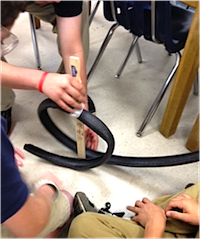 8. Does my lesson place teachers in a facilitator role rather than a lecture/discussion role? Remember to write your lessons in such a manner that they minimize the risk of a teacher standing in front of students and simply telling them what they need to know. The teacher should explain, monitor, support, and oversee the work of the teams. She or he should leave space for the students to learn and make decisions.
9. Do my STEM lessons engage students in communicating during and following the project? Accurate and useful communication is another highly valued workforce skill and can take place in a number of ways. Students may communicate with experts during their quest for a solution. They may regularly communicate with other teams to exchange information. They may publicize their final solutions in writing, online, through drama, or in other ways. Give them options for communication.
10. Do my STEM lessons remove the fear of failure? Do they help students and teachers understand that failure is a positive step on the way to discovering and creating a solution. In fact, it’s a necessary step in learning and designing solutions. During STEM lessons, all students should feel safe in taking risks. Mistakes can actually lead them to a deeper level of understanding.
11. Are my STEM lessons designed to appeal equally to boys and girls? All STEM lessons need not deal with machinery. Some might spotlight health or environmental issues that appeal to a wide variety of students. STEM lessons should also involve special education students in experiencing success.
12. Do my STEM lessons promote authentic assessments in determining student and team success? For example, you might suggest that teachers give teams rubrics to help them determine the degree to which their products met the criteria and constraints. Teamwork productivity might be evaluated. Project participation should be high for all students. Scores on math and science content should increase. Come up with multiple ways to assess students. Multiple ways don’t start and end with multiple choice tests.
So that’s my starter pack of tips . . .
Before you throw up your hands and decide you can never write a lesson that has all of these components, let me assure that you can.
Every lesson you write will not focus heavily on all of the components. That would probably be a book and not a lesson. Some components (particularly numbers 7-12) are stressed in some lessons more than others. But over the course of several lessons I try to be sure that all these elements come into play.
My advice – just go for it. Look at your course objectives, come up with a real world challenge and start writing. Check out my earlier post 12 Steps to Great Stem Lessons for some additional “how to” ideas.
And if you have other useful tips of your own, please share!