Transliteracy for Middle Graders
A MiddleWeb Resource Roundup
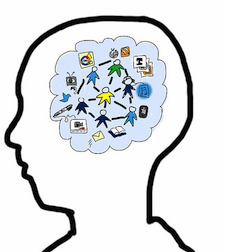 Transliteracy is the ability to read, write and interact across a range of platforms, tools and media from signing and orality through handwriting, print, TV, radio and film, to digital social networks.
– Transliteracy.com
What does transliteracy mean to you? What is its place in your classroom? Answers vary. Academic librarians Bobbi Newman and Tom Ipri provide a succinct introduction of the background and use of transliteracy in their “Beginner’s Guide.” Newman, the Librarian by Day who writes with Ipri and others at the blog Libraries and Transliteracy, has created a 2012 slideshare to update ideas surrounding transliteracy, stressing the scope and inclusiveness of transliteracy encompassing other literacies. In part, the piece responds to some of the concerns on the usefulness of the word.
Essentially, according to Professor Sue Thomas of the UK’s De Montfort University’s Institute of Creative Technologies, transliteracy is “the ability to read, write and interact across a range of platforms, tools and media from signing and orality through handwriting, print, TV, radio and film, to digital social networks.”
K-12 teacher librarians have adapted the concept for their students. Joyce Valenza, writing in her School Library Journal blog Neverending Search, is concerned that students understand and can use literacies that take them beyond reading and writing and provides links to several resources. She illustrates the potential of multiple platforms with librarian Brian Hulsey’s video, “Everyday Transliteracy,” from his blog, Strange Dichotomy. His catalog of possible media resources (“avenues for communication”) for sharing a blueberry smoothie recipe is easy for students to understand.
 Among high school librarian Buffy Hamilton’s presentations on transliteracy is a slide show, ”Transforming Information Literacy for Today’s K-12 Learners through the Lens of Transliteracy, Inquiry, and Participatory Learning.” Hamilton vividly illustrates not only what the term means but also what it looks like as students explore its potential. Explore her ideas more deeply at The Unquiet Librarian.
Fourth graders take to transliterate learning in a post from Silvia Rosenthal Tolisano at her Langwitches blog. See what happens when van Gogh meets QR codes and mp3 files. Elsewhere, a multi-faceted comics related project for college students (described at DMLcentral) could inspire teachers to involve older middle graders in a range of transliteracies.
Even if it’s too late to attend the American Association of School Librarians’ fall forum, “Transliteracy and the School Library Program” October 12 and 13, follow the Ning and Twitter hashtag #aasl12 to find “strategies for integrating transliteracy skills into subject areas across the curriculum.”
For a look at how transliteracy and multi-modality can support implementation of the Common Core standards, register for the School Library Journal’s free webinar, “On Common Core – Getting Real,” set for October 18. The 3 pm event features Rutgers Professor Marc Aronson and school district library director Sue Bartle and is the first of three CCSS related webinars. All three will be archived for interested viewers who miss the live events.
Transmedia projects are turning up in school libraries and classrooms every day. How do they relate to transliteracy? According to former middle school teacher and School Library Journal blogger, Peter Gutierrez, “Simply put, transmedia is the result of transliteracy, which is a larger concept and one that can be applied to the more old-fashioned book vs. movie approach, where different media are established as oppositional, not complementary. Remember, with transmedia we’re not talking about a property that can be appreciated solely through a single medium.” Transmedia is sometimes called transmedia storytelling, defined in a Wikipedia entry as “the technique of telling a single story or story experience across multiple platforms and formats using current digital technologies.”
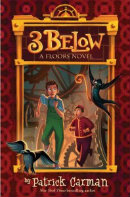 More writers are creating their works with “transmedia” in mind. Patrick Carman is the author of many popular fiction books for children and young adults, including Skeleton Creek, Trackers, Thirteen Days to Midnight, Dark Eden and the just published 3 Below. After touring middle schools for several years during the past decade, Carman realized that combining written words with video could be a way to bring young readers back to books. So he began experimenting. He reports the result In “Read Beyond the Lines: Transmedia has changed the very notion of books and reading.” Hundreds of teachers and librarians have told him that reluctant readers have returned to his and other multi-platform books. He sees transmedia projects involving print, apps, games, and more, as meeting the youngsters halfway.
Whether a narrative is presented to students or is created by students, they can enter a transmedia story from several digital directions (and often participate in the action). In a collection of articles and resources at the National Writing Project’s DIGITAL IS website, upper elementary media specialist Laura Fleming explores ways that teachers can make use of transmedia in the classroom. Teachers might want to start at this Transmedia Collection page. “Developing a narrative over multiple platforms while interweaving learning outcomes,” Fleming says, can “create transformational learning experiences.” She offers the example of a “born-digital” story called Inanimate Alice (which you can learn about here and then experience here. Also check out the Inanimate Alice Facebook page.)
 For quick access to more transliteracy resources, visit Bobbi Newman’s Pinterest collection. Looking beyond the scholarly debate about the best ways to name and describe the new-literacies phenomenon, the most important concern of the classroom educator (and parents and families, for that matter) is how to capitalize on transmedia content to engage students in reading and writing — and understanding stories and nonfiction content — across multiple media platforms. The ultimate goal, of course, is to be sure our iGeneration students are “transliterate.”
June 2014 Update: from School Library Journal, Transmedia and Education: How Transmedia Is Changing the Way We Learn by Carolyn Sun
Image of 21st C learner: Guilia Forsythe, Creative Commons.










7 Responses
[…] Help middle grades students understand and integrate transliteracy into the classroom to boost their learning and engagement. Transmedia is one tool to help. […]
[…] Help middle grades students understand and integrate transliteracy into the classroom to boost their learning and engagement. Transmedia is one tool to help. (Is transmedia the result of transliteracy? […]
[…] "What does transliteracy mean to you? What is its place in your classroom? Answers vary. Academic librarians Bobbi Newman and Tom Ipri provide a succinct introduction of the background and use of transliteracy in their “Beginner’s Guide.” Newman, the Librarian by Day who writes with Ipri and others at the blog Libraries and Transliteracy, has created a 2012 slideshare to update ideas surrounding transliteracy, stressing the scope and inclusiveness of transliteracy encompassing other literacies. In part, the piece responds to some of the concerns on the usefulness of the word." […]
[…] Help middle grades students understand and integrate transliteracy into the classroom to boost their learning and engagement. Transmedia is one tool to help. […]
[…] Help middle grades students understand and integrate transliteracy into the classroom to boost their learning and engagement. Transmedia is one tool to help. A lot of great links available on this page. […]
[…] By Susan Curtis"Essentially, according to Professor Sue Thomas of the UK’s De Montfort University’s Institute of Creative Technologies, transliteracy is “the ability to read, write and interact across a range of platforms, tools and media from signing and orality through handwriting, print, TV, radio and film, to digital social networks.”"K-12 teacher librarians have adapted the concept for their students. Joyce Valenza, writing in her School Library Journal blog Neverending Search, is concerned that students understand and can use literacies that take them beyond reading and writing and provides links to several resources. She illustrates the potential of multiple platforms with librarian Brian Hulsey’s video, “Everyday Transliteracy,” from his blog, Strange Dichotomy. His catalog of possible media resources (“avenues for communication”) for sharing a blueberry smoothie recipe is easy for students to understand." […]
[…] for sharing a blueberry smoothie recipe is easy for students to understand.”See on http://www.middleweb.com Like this:LikeBe the first to like […]