
Ethical & Effective Test Prep
 Larry Ferlazzo teaches English and Social Studies at Luther Burbank High School in Sacramento, California. He has written many books on education, writes a teacher advice blog for Education Week Teacher, and has his own popular resource-sharing blog. He began his public school career after working for nearly 20 years as a community organizer.
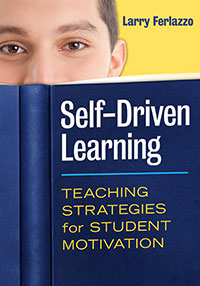
This article is adapted from Larry’s 2013 book, Self-Driven Learning: Teaching Strategies For Student Motivation, published by Routledge Eye on Education.
 by Larry Ferlazzo
How can you best prepare your students for standardized tests while doing no harm to them?
Much has been written about the many problems with high-stakes testing. A paper coauthored by top motivation researchers Netta Weinstein and Richard Ryan (2010) has listed a few of the problems resulting from high-stakes testing, including “teaching to the test, narrowing of curricula, [and] crowding out of enriching student activities” (p. 230). A 2011 report from the National Academy of Sciences also criticized the negative impact high-stakes testing has had on student learning.
This question sent to me by a teacher sets the stage:
So much rides on the results of standardized tests these days. They’re even talking about making student scores worth 50 percent of my own evaluation and using them to determine my pay! I don’t want to spend weeks “drilling and killing” my students with test-prep work sheets. What am I supposed to do?”
Ted Appel, principal at Luther Burbank High School in Sacramento, California, has characterized test results as being useful for being “data-informed,” but cautions against using them to be “data-driven.” What’s the difference?
If schools are data-driven, they might make decisions like keeping students in algebra classes who may be ready to take a higher level of math so that the school does well on the algebra state test. Or, in English, teachers might focus a lot of energy on teaching a strand that is heavily emphasized on the tests—even though it might not help students become lifelong readers.
In other words, data-driven schools can tend to focus on their institutional self-interest instead of what’s best for the students. In schools that are data-informed, test results are just one more piece of information that can be helpful in determining future directions.
Becoming better at taking standardized tests is nowhere near as important as the countless other purposes of education, such as developing greater self-control, a stronger ability to cope with stress, and a willingness to look at problems and mistakes as opportunities to learn. Nevertheless, we live (as community organizers say) in the world as it is, not in the world as we would like it to be. In the current world, high-stakes standardized tests are a reality.
Effective and ethical ways to prepare our students
Given the high-stakes testing realities, besides being the best teachers we can be during the year (as well as being advocates of reducing or eliminating standardized test use and replacing it with more effective evaluation tools, such as teacher-developed assessments and student portfolios), what are the most effective and ethical ways we can help prepare our students to do their best on these tests and, at the same time, help them develop strategies to cope with other high-stress situations they may face in the future, including job interviews and oral presentations?
This excerpt offers a few suggestions that may help. In my book Self-Driven Learning, the full chapter provides extensive research-based evidence and lesson plans that teachers can use to oppose common but disruptive and time-intensive test prep activities that are prevalent in many schools today.
The hope is that we teachers will do no harm to our students, while at the same time assisting them to bring their best efforts to the task—and, perhaps, learn a few strategies that might help them successfully prepare for other challenging situations in their lives.
The ideas here are designed to make test prep and taking tests less demeaning, distressing, and depressing exercises—to teachers and to students—than they are so often today.
Research shows that at least 15 percent, and possibly as much as 30 percent, of a test taker’s success could depend on his or her motivation and other ambiguous factors. Here are some ways teachers can ethically help increase the odds that students maximize their potential in the context of these “factors.”
Invoke a Success Mindset
Asking students to take a minute or two prior to the test to write about a successful personal experience or to write about another successful person has resulted in higher test scores.
My personal favorite activity in this category is to give students five minutes to respond to this prompt:
Think about one of your ancestors, and write about one or more successes he or she had in life. Write a few sentences about the person, and draw a picture that represents him or her, and/or his or her success.
Then, after a few minutes, I have them share with a partner, which incorporates the next activity described in this chapter—having a conversation.
 This ancestor exercise builds on research that found having students spend a few minutes just thinking about ancestors—deceased or alive—or writing about them prior to taking a standardized test will result in greater effort and better results. The researchers concluded that thinking about the success of those with whom we are genetically connected, and the problems that they have overcome, makes us believe that we have similar qualities.
An additional benefit: Teachers can learn some amazing things about students and their families. Here are a few condensed examples of what students have written:
• My auntie finally finished her college years.
• My mom’s grandmother’s mom was a slave and was alive when slavery ended. She got to celebrate, and even if she hadn’t anywhere to go it was a special moment for her.
• My dad got to America. He got papers.
• My grandpa was born in Mexico and grew up there. Growing up he messed around with ropes because he loved the style, so he got really good and great with horses. He never lost a match. It’s about how many you catch and all you have is a horse and a rope.
• One good, successful person that I know is my dad. I think that he is a successful person because when something bad happens in our family he always knows what to do.
• My grandfather was a CIA soldier. That was one of his success because he helped Americans during the Vietnam War.
More research: Girls just seeing images of famous women scientists on the walls has resulted in higher science scores. Though research has not yet been undertaken to explore the additional implications of these study results, it certainly couldn’t hurt to place images of successful scientists and professionals representing different ethnic groups and genders around the classroom. (The research behind these strategies can be explained to students so they can use it to prepare for future high-stakes activities.)
Build Social Capital through Conversation
Dividing the class into pairs and having them talk about a social issue for 10 minutes prior to a test has been found to result in higher scores. This kind of social interaction and building of “social capital” increased mental processing speed and working memory, according to researchers.
 Why? It appears to warm up the brain, especially areas like working memory and concentration, which are used in both social engagement and taking a test.
To facilitate the process, students could possibly determine their own topics and partners prior to testing day. Though the social issue discussed in the research experiment was a current event, it appears that researchers believe any topic of mutual interest that can be sustained for ten minutes would achieve the same effect (as long as it took place between friends).
Another study found that just asking participants to spend eight minutes getting to know another person produced similar results. A few guided questions could energize the “getting to know you” process. Again, teachers can explain the research behind this activity and discuss it as a tool that students might use in preparing for future challenging situations.
Provide Refreshments
 Researchers have found that providing students with peppermints on test days has resulted in higher scores. It is thought that they both provide glucose for the brain that can enhance memory and that their odor somehow increases student attention.
Drinking a cup of water twenty minutes prior to taking a test has also had positive results. Researchers are not exactly sure why results on tests improved, but others suggest that students being better hydrated is an important reason for the improvement.
Once again, in addition to potentially providing the right refreshments to students on test day, teachers can explain their effect on performance and students can consider getting them on their own in the future—prior to tests and at other times when they want to be as focused as possible.
Acknowledge Test-Taking Stress
Some of us — students and adults — just don’t do well in high-pressure situations like taking tests. Researchers have found that having students write about their test-taking thoughts and worries for ten minutes prior to the start of the exam “canceled out the negative effects of test anxiety.” The researchers believe that putting the worries on paper helped clear the working memory of stressful clutter that would disrupt cognitive functions.
You’ll find other research-based ideas for test preparation in Chapter 7 of Self-Driven Learning. None of them are earth-shattering or magical, but they may help reduce the damage these tests can cause to our students, and to our schools and educators who also feel the heat of the high stakes spotlight. My hope is that they will also provide our students with strategies that can help them be more successful in the future, where high-stakes situations will certainly arise.
This article was adapted and excerpted with permission from Self-Driven Learning: Teaching Strategies for Student Motivation, by Larry Ferlazzo, Copyright © 2013 Routledge Eye On Education. All rights reserved
















Larry, you really know how to make a silk purse out of a sow’s ear, to borrow an old colloquialism. I see and hear a lot of comments about standardized testing that I agree with; for example, this statement of Ingersoll about the impact of standardized testing. He maintains it has created . . . ” a culture of increased accountability – good in theory, more questionable in practice – has made the classroom an ever-less appealing place to work. With a steady focus on testing, teachers have less discretion and less autonomy in their classrooms, and that leads many to find work elsewhere.”
Enter – Larry – with a focus on how to make the best of this situation (the reality) rather than focus on the downside. Thanks for that “take” on the situation . . . it provides teachers with something positive to focus on during a stressful period.