Is Your STEM Program Ready for Prime Time?
A MiddleWeb Blog
What does a top-notch STEM program look like? One of the best resources around to help answer that question is the Change the Equation (CTEq) organization. It’s a coalition of nearly 80 companies that together devote more than $750 million to STEM learning programs every year.
“Many of these companies have been dissatisfied in the past with the results of their investments,” Claus von Zastrow, CTEq’s chief operating officer, says. In a effort to establish better guidelines for quality STEM programs, the CTEq partnership created STEMworks – a program to identify STEM programs “that are most likely to make a difference for children, their schools, or their communities,” according to von Zastrow.
 How does STEMworks do this? Programs that apply to STEMworks rate themselves against CTEq’s 10 Design Principles for Effective STEM Philanthropy and must provide evidence to back up their ratings. As part of the review process, WestEd, a major nonprofit research and evaluation organization, scrutinizes the applications and offers detailed feedback that is used to determine which programs make the cut for admission into the STEMworks database. (The names of programs that apply but are not accepted to the database remain confidential.)
Why would STEM programs submit to this process? I can think of several reasons: they want to measure themselves against a high standard, for one. For another, they want to get better and see the WestEd feedback as valuable information they can integrate into their own design process. And finally, many applicants are understandably eager to prove themselves worthy of support from business and industry.
Here’s what Claus von Zastrow says: “CTEq ensures that programs who earn a place in the STEMworks database gain exposure to its corporate members and other funders. Our goal is to uncover programs that have been doing excellent work but have not received the attention or support they deserve. The more of these programs we can bring to the light of day, the more young people will have a shot at an exciting and rewarding future.”
A STEMworks program example
 I’m fortunate to have worked with a program that’s been accepted into the STEMworks database. Let me tell you something about it, and you can take a look at how the database shares program information.
Major industries in Mobile Alabama, including aerospace and shipbuilding, faced a growing problem. They needed highly skilled and technology-savvy workers. They needed workers who could think critically and work together successfully to solve problems. In 2007 the Mobile Area Education Foundation (MAEF) stepped up to the plate. Partnering with local businesses & organizations, a local university, and the Mobile County Public School System, MAEF established a wide-ranging STEM initiative – Engaging Youth through Engineering (EYE) – to address Mobile’s workforce and economic development issues.
As one part of this initiative, a team of writers, teachers, and consultants work with EYE to design STEM middle grades curriculum modules that add relevance and rigor to required science and math content. They also aim to inspire, engage, and prepare middle school students to take the coursework needed to support the growing demand for major industries in the area.
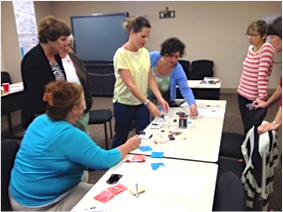 So how’s the EYE program working? Would these STEM modules or some other recognized STEM resources work for your schools? Peruse the STEMworks Database and find out.
On the left side of the STEMworks Database home page, click on descriptors for the type of program you are looking for; or, type in the name of the program if you know it. Bingo! If the program is in this database, then it meets rigorous standards and is worthy of your attention.
STEMworks and Your STEM Program
Can you get your STEM program in the STEMworks database? Consider these 10 questions and examine the related overarching principle descriptions to determine how you might measure up under WestEd’s scrutiny:
- Why do we need this STEM program?
- How do we measure our progress toward addressing that need?
- Is our work sustainable?
- Is our program replicable and scalable?
- Have we established partnerships to help with this STEM initiative?
- Do we have the capacity to reach our goals?
- Is our STEM content challenging and relevant for our audience?
- How do we incorporate and encourage STEM practices?
- Does our program inspire interest and engagement in STEM?
- Does it address the needs of underrepresented groups?
After testing your work against the STEM principles, decide where your program needs improvement or if it’s ready to submit to STEMworks for possible admission. Remember that your program does not need to be high-profile to apply for STEMworks inclusion.
Apply by March 7th!
 Are you ready to be a part of this? STEMworks is currently accepting applications until March 7. If you want to learn more, please don’t hesitate to reach out to Dr. Von Zastrow. He would be happy to help any effective STEM program get recognition. If you aren’t quite ready to apply, you now know more about what funders expect, and where to look for details about programs (and contacts) that might be of benefit to you.
I agree with Claus von Zastrow when he says that today’s STEM-related companies are really motivated to support your best work:
“The business community has a tremendous stake in our education system, and increasing the impact of their STEM philanthropy is a moral imperative that makes very good business sense. Companies are competing with each other to attract STEM talent for high-paying jobs, and that competition will only grow fiercer down the road.”
This competition for talent is good news for our students, provided we prepare them to be excellent.