
How to Recruit & Retain Middle School Volunteers
 By Judith Wencel
SUCCESS in the Middle
I long ago lost track of the number of times I’ve heard people say that nobody will volunteer in middle schools.
After starting a tutoring program 20 years ago at Coleman Middle School in Wichita, Kansas, and growing it over time to about 135 volunteers a year, serving an average of two students each, I can say with certainty that people WILL volunteer in middle schools if they are specifically asked and if they are well-supported.
However, it has taken nearly the entire 20 years to learn (often the hard way) what works and what doesn’t… and I’m still learning. A few of those lessons learned are shared below in hopes that middle schools desiring to engage volunteers with their middle school students can shave some years off the learning curve. :-)
Lay a Strong Foundation
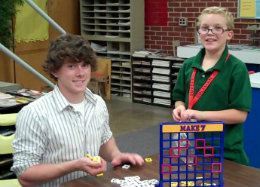 Before considering the recruiting of volunteers, make sure there is a strong foundation in place at the school or site, including an on-site coordinator with excellent customer service skills, decent clerical skills and an appreciation of the challenges of middle schoolers. (It is preferable to have had middle schoolers of his/her own). Training specific to the needs of middle schoolers is a must, and a designated tutoring/mentoring room and resources can greatly contribute to a good volunteer experience. Volunteers will talk about their experience whether it’s good or bad, so make it good!
Create a Menu of Opportunities
Creating a menu of opportunities helps greatly with recruiting. Volunteers who sign up with our organization SUCCESS in the Middle may indicate a preference to come once, once a month, twice a month or weekly, for 4-6 weeks, a semester or for the year any time between about 7 AM and 7 PM weekdays and also on Saturday mornings and afternoons. They may help with homework and study skills or work on basic skills (math, reading) or they can share an interest, skill or career. They may also come for a “girl group” or “guy group” where they have lunch together, chat and play board games, etc.
Consider These Recruiting Ideas
► For businesses, I usually start with the community outreach person at an office or company. I call and explain our need and ask if they would be willing to have me send some information to share.
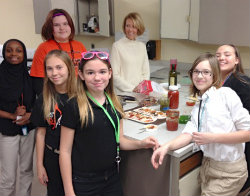 When they say yes, I send a link to a flyer and also a description they can share in their newsletter. I also offer to come to a staff meeting to give a very short presentation. It could also be a good idea to make a 5-minute video, post it on YouTube and provide that link.
► Health professions draw naturally caring folks so they can be a nice resource for mentors in particular. Nurses (and other shift-workers) have non-traditional schedules so the potential for volunteering during the school day is a bit better. And speaking of shift-workers, don’t neglect to invite manufacturing folks to participate. Meeting the needs of our community’s future STEM workforce will depend on getting more students interested in those careers, as well.
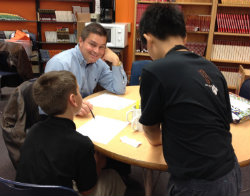 ► Engineering folks from local tech companies (or the IT department of any company) can be excellent STEM mentors but don’t forget that they frequently are project-oriented people. Think about the implications of that characteristic for interacting with middle schoolers.
Middle schoolers do NOT want to be “fixed” or treated as a project so consider meeting the needs all around by providing specific projects or assignments, but make sure the training attended by the techy volunteers addresses the psycho-social and developmental needs of middle schoolers.
► For college-age volunteers, I’ve gone through the university student involvement office and/or contacted professors who are teaching the subjects we need help with. And of course the education department of a local college or university can be a great resource.
Student professional organizations often require a bit of community service, and if options exist to engage volunteers around the subject of the organization (engineering, pre-med, etc.), there can be a better response. In the same way that middle schoolers’ engagement is increased when their interests are taken into consideration, college volunteers are more likely to be engaged when their interests are taken into consideration.
► Some churches are very service- and outreach-oriented and are happy to put something in their bulletin or on a bulletin board about the need for volunteers; other churches have a few ministries and missions they have chosen to focus time and resources on.
Establish a Foothold
The best recruitment of all is a personal invitation, so after one or two folks from a company, office, school, or church begin volunteering (and they have a great experience), they can become great ambassadors for your volunteer program.
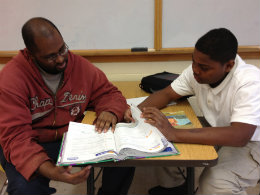 If you send a monthly or quarterly newsletter to current volunteers, include a link to a PDF they can print and post at their company, or provide information on how to sign up that they can share with friends.
If a particular need comes up, provide a short and sweet description, send it to current volunteers and ask them to forward it to a few friends who can do math, for instance, or who enjoy social studies or science projects, etc. Too many “urgent requests” start to get diluted so use this tactic sparingly.
Bear in mind that very few people sign up after seeing or hearing about something once, so posting something that people will see regularly (above a copy machine, in a kitchen, in a classroom, on a hallway bulletin board, etc.) can be more effective than a single mention in a newsletter or office e-mail. Posting a flyer on a restaurant’s bulletin board or at a bookstore or gym can also be beneficial. Consider adding a QR code to the flyer so folks can pull out their smartphone and capture the website.
Leverage the Power of Social Media
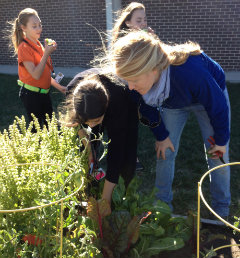 Social media can also be a good way to spread the need for volunteers. Make a Facebook page or Group and add stories and photos (with permission!) and tag the person or organization or company, etc., so they are credited on their own page (and to increase visibility). Create a LinkedIn or Google Plus group. Start a Twitter hashtag group with a regularly scheduled live chat that can be archived.
On your social media pages, make sure there is a nice balance between pleas for help and engaging stories. A few short videos of volunteers and/or students sharing what they’ve been doing together can be very effective. It’s helpful, also, to include photos and videos of all ages, ethnicities and both genders so potential volunteers can see people “like them” in action.
Collaborate with other schools, neighborhood sites and agencies. Gather with those recruiters and share everyone’s needs so volunteers whose schedules or preferences don’t fit your options can be shared with another entity that can use them. It’s a terrible shame to lose a willing volunteer (especially for middle schoolers!) just because they don’t fit your own organization or school, etc.
Serve Your Volunteers Well
In the pursuit of quantity it’s imperative not to neglect quality. Volunteers are usually competent, capable and generous people (especially if they’ve signed up to hang out with middle schoolers!), but they still need top-notch customer service.
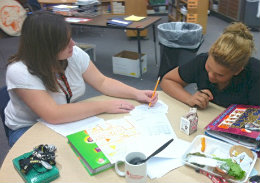 Volunteers need to be greeted each time they arrive and thanked at the end. Their needs for resources, ideas and trouble-shooting are usually immediate; thus the need for an on-site coordinator. A teacher receiving volunteers into his/her room during class time or after lunch can fill this role, but if volunteers are meeting with middle school students over the lunch hour or after school, the importance of a coordinator can’t be overstated.
As I said in the beginning, I can promise that people will volunteer in middle schools if they are specifically asked and if they are well-supported. Our middle grades students deserve and benefit from the positive support and guidance of caring and knowledgeable adults. I hope that my “lessons learned” will help you make this possible for the young adolescents in your community.
Judith Wencel started a tutoring/mentoring program at Coleman Middle School in 1992 and continued to run that program until the 2013-14 school year, with a five-year break when she worked for Big Brothers Big Sisters. In 2005 WenceI created SUCCESS in the Middle (Students Ultimately in Charge of their Effort, Skills and Support) to raise awareness of the needs of middle schoolers and to recruit volunteers for schools, sites and agencies. SUCCESS in the Middle continues bringing volunteers and middle schoolers together, currently with its Summer of SUCCESS camps.