The Wisdom We Gain by Writing with Students
A MiddleWeb Blog
Mary Tarashuk will be recognized today at the ASCD Empower conference with the 2017 SmartBrief Educators’ Choice Award.
 Back in my early days as a teacher, writing was the area I felt least capable of teaching well.
As a writer, this was particularly troublesome, not to mention ironic. One would think that a teacher who writes “outside of school” must be quite strong in that particular area of instruction. Not so.
Sure, we had a language textbook. We had comprehension questions to address our understanding and sentence structure to break apart, analyze, and rebuild. We had stories to tell and opinions to share.
But I didn’t feel confident about delivery of instruction. Maybe, deep down, something inside me knew my methods were lacking in authenticity. How do you “teach” writing anyway?
In retrospect, I see one major difference between then and now. Back then I was a brand new teacher who was entering a time of infant-and-toddler juggling at home and curriculum juggling at school.
These stages of early motherhood and early teacherhood prevented me from somehow doing the thing that would prove to be vital as a teacher of writing…actually making time to write with my students…or even by myself for that matter.
(See Do You Write with Your Students? by Rebecca Alber and To Teach Effective Writing, Model Effective Writing by David Cutler.)
Today things are different
Today I make time to write and, as a result, the writers in class 4T (myself included) are guided by a more secure narrator. Today I try to model for my learners the process of developing their own personal voice.
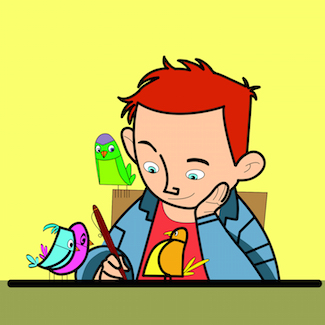 I make time to write. It’s that simple. I write at school, in front of my learners, on our interactive white board…off the cuff. They respond well to this approach. They are eager to share their ideas with the class too. Having their own writing projected on that same white board is all the incentive that’s needed for a good look at some up-close and personal 4T writing.
Keeping things simple isn’t an original idea, but it certainly is a useful tool…a tool I can always rely on.
The value of keeping it simple
Sometimes the only way to not get too sucked into the spin of Big Education is to go back to the basics. Today I simply try to focus on having thoughtful and valuable learning objectives and modeling positive learning behaviors. The first part is easier. It’s the latter, the walking-the-walk part, that can be more of a challenge.
So today Madeline Hunter and an upcoming trip to Anaheim for the ASCD Empower 17 Conference will serve as the “Materials” needed to support some more personal lesson plans I am developing.
Back in my grad school days in the early 90’s, Madeline Hunter provided the scaffolding we needed to begin our careers as educators. Madeline kept it simple. Madeline gave us a format to follow while allowing us the freedom needed to personalize our own instruction, to begin to become the teachers we are today.
Let’s see if we can apply her simple approach to my current 4T class, as we prepare for a trip to the West Coast.
The Madeline Hunter Model
 ✻ Lesson Date and Time: September 2016 – June 2017
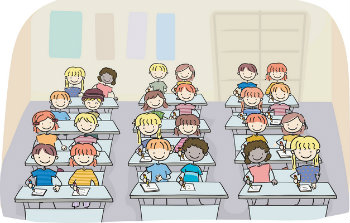
✻ Students: Anywhere from 19 to 25…Wait, some days there are 44, but that’s when I team up with my partner in crime, Matt, for a special lesson or activity. He’s an amazing teacher!
✻ Room Number: 106. Please note that March 24-27 we will have an annex learning lab in Anaheim, California at the 2017 ASCD Conference.
✻ Miscellaneous Information: Please refer to previous blogs, notebooks full of rantings, prior lesson plans, journals full of reflection and hope…and student writing samples.
✻ What is the lesson objective?
Students will learn that it’s okay to take risks. To “put themselves out there.” They will identify and recognize the feelings they have about taking these risks; share common experiences about past successes and failures; and develop a healthy anticipation toward setting goals and overcoming nervous excitement.
✻ Standards addressed and expectations of students (and their teacher):
I don’t know the specific decimal representations for the standards we plan to address, but we will cover a broad range of higher end thinking skills; we will read and write about topics across the curriculum; we will blend technology benchmarks into our weekly explorations and learn how to share our ideas and listen to those of others through thoughtful (and sometimes loud) class discussions and activities.
We will try to make connections across the curriculum, be respectful of others, and do our best to support each other as a learning community. From this point forward, we shall simply refer to it as Madeline Hunter 4.0.
✻ Anticipatory Set:
 The first “Hook” was actually on September 8, 2016. Throughout the years, less thought has gone into the bells and whistles that I used to think were required to get the kids’ attention and “begin” the lesson.
Nowadays I find that if you pique their interest and participate wholeheartedly, they jump in with you, no matter the topic. It’s more about attitude than simply grabbing their attention with a show-stopper. But I’d be lying if I said I didn’t pull out a jaw-dropper from time to time…just to mix things up a bit.
✻ Teaching/Instructional Process:
Teach well, explore new ideas, share them with others, stay inspired, show up, be prepared, and develop some serious monitoring and adjusting skills! Some days get pretty nutty!
✻ Guided practice and monitoring:
Please see “Teaching/Instructional Process” above.
There is a lot of paperwork these days, so if it’s okay, I would prefer not to spend too much time explaining the specifics of what we are exploring each day. I would prefer to spend that time preparing for our learning, exploring new things, collaborating with other educators whom I admire…and writing through my frustrations.
✻ Closure:
The word closure seems too final for learning…sorry Madeline. In this particular case though, I’ll end this part of our learning by sharing with my students the nervousness and excitement I am feeling as I prepare to try something completely new and unfamiliar.
I’m going to explain that I’m meeting with other teachers from all over the place, at my first big professional development conference, to share ideas and see what’s going on “out there” with other schools and other kids, and to get an award for something that I wrote from my heart. They know how good it feels to have your voice recognized. I will also remind them that, when I was their age, I wanted to be a writer.
✻ Independent Practice:
I’m going to get on a plane and go to California for a few days…to see what awaits.
 Special Note: Thank you Melissa Greenwood, Jared Stearns, and all the wonderful people over at SmartBrief Education, for reading my article, hearing my voice, and sharing it with others. Thanks also for giving this New Jersey teacher a California adventure! The SmartBrief Educators’ Choice Content Award was sure one heck of an anticipatory set!