
Teachers: Plan to Care for Yourself This Year
 By Debbie Silver, Ed.D.
One great thing about being a teacher is that you get to have two New Years. Instead of only celebrating the calendar change on January 1st, teachers observe a more important event at the end of summer break – New School Year.
Generally, educators are excited and optimistic about the approaching school term. This is an optimal time to plan how you will retain the initial sense of enthusiasm and anticipation that typically infuses the New School Year’s arrival.
Start-of-school brings countless decisions to be made and an overwhelming number of routine tasks to be accomplished. It’s also an opportune time to consider how you can shape the entire year by choosing actions that will sustain you personally.
In a career that regularly requires them to be selfless, teachers often view themselves as givers and helpers. They get so busy taking care of everyone else they often neglect their own self-care.
Too many times you put your own needs last and tend to think that taking care of physical, psychological, and mental needs is being a bit self-seeking. Nothing could be further from the truth. Taking care of yourself is probably the least selfish thing a teacher can do.
3 Ways to Promote Self-Care This Year
1. Plan cautiously when allocating your time.
Probably the hardest sound for nurturing, can-do teachers to utter is that simple two-letter word – “no.”
The new school year typically presents many requests for teachers to volunteer for extra duties. There are sign-up sheets for various committees, appeals for club sponsors, and requests to take on additional tasks. Decide now how you will commit your time. It’s generous to offer help, but remember that overextending yourself diminishes your well-being and your ability to do your primary job – teach kids.
 ► As school starts, create a realistic timeline of all that you will be doing at home and in your classroom each day and week. (Pad your timeline for the moments when “life happens.”) Take an honest look at how much time you actually have to devote to outside commitments, and be prepared to limit yourself to the ones you feel capable of doing, wish to do,and genuinely have time for.
► Practice the art of saying “no” to a colleague or to an administrator with assertiveness. You do not need to be aggressive, hostile, or rude, but you do need to mean what you say. Here’s a helpful 3-point response to use from Deliberate Optimism: Reclaiming the Joy in Teaching:
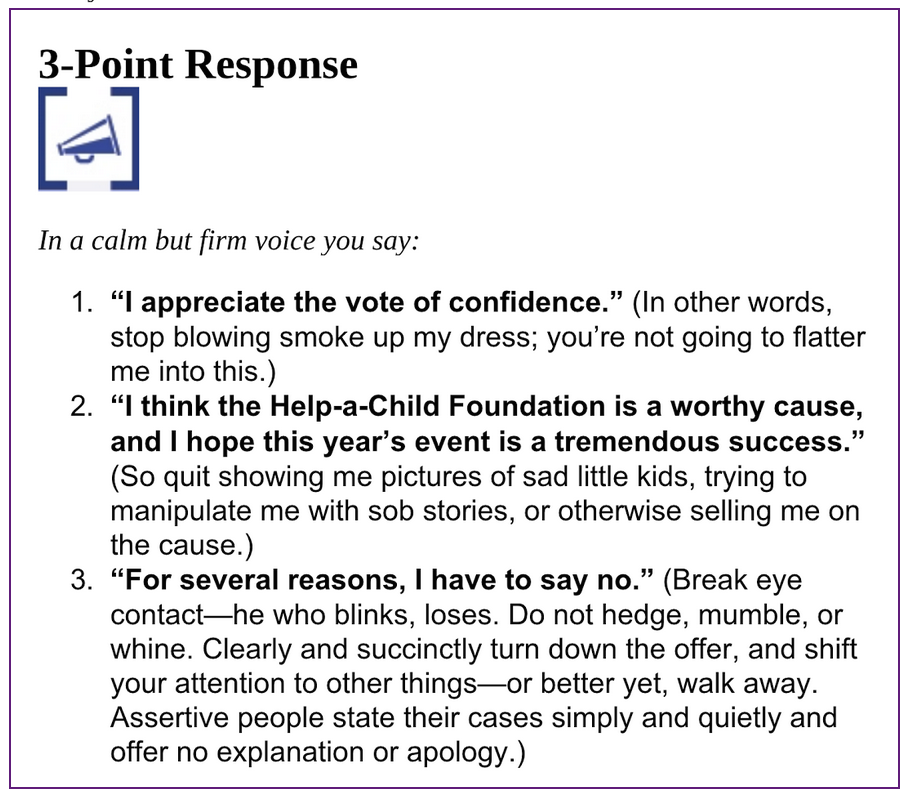
► Most importantly, don’t harbor guilty feelings. By not volunteering for everything that comes your way, you can often nudge others into roles they may need to try. You also save your time and attention for tasks that are personally gratifying to you and, therefore, cause you less stress. Your time is one of your most precious commodities. Take control of it and invest it carefully in the New Year.
2. Plan for a healthier you.
Effective teaching requires stamina and energy. It takes a physically healthy person to best meet the needs of active learners. Teachers ought to plan now for healthy choices in the new school year.
► Get a smart watch or fitness tracker to keep count of how many steps you take during the day.
 A recent study of motel maids showed than when the housekeepers were made aware of the equivalent exercise they were doing by changing beds, vacuuming, and other daily tasks, their attitudes as well as their fitness levels improved. Devise a way to chart your daily bends, stretches, and steps taken at school to reinforce your exercise goals.
► Plan now for the light, healthy meals and snacks you’ll take every day to school. Make a trip to the store to get the containers, cool packs, and zip lock bags you’ll need to have nourishing food and drinks on hand throughout the day. Promise yourself not to skip meals or eat lunch from the vending machines. Food is fuel, and wholesome food provides the power teachers need for vitality.
► Purchase (or round up your) comfortable shoes. Fashion is nice (especially if you teach eighth grade girls), but uncomfortable shoes can drain your drive and momentum more quickly than just about anything. Plan your wardrobe with attention to the temperature of your room, scope of activities, bus and other “teaching duties.” (Yes, veteran teachers already know this, but those new to the profession may need to consider it.)
3. Plan for personal mental health.
Teaching is not only physically demanding but also mentally taxing. Preparations for the New Year should include laying groundwork for elements that influence personal psychological states. Teachers must be aware of their personal “triggers” and take steps now to minimize their influence (e.g. clutter, disorganization, feelings of being overwhelmed, etc.).
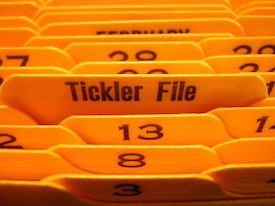 ► Ideas, thoughts, instructions, and insights constantly besiege teachers’ minds throughout each day. Having a way to move these from working memory into a reliable storing system can immensely relieve stress and improve organizational skills. Before this year begins, teachers may want to read about “tickler files” in David Allen’s Getting Thing Done: The Art of Stress Free Productivity or in this blog post from Home Storage Solutions.
► Create a journal (paper or electronic) to capture daily reflections. Making the time to record musings, questions, and statements of gratitude from the school day can have immense constructive impact on frames of mind. Writing at the end of the day can provide closure, and reading it at the beginning of the following morning can help fortify a plan of action. Teachers who regularly journal report they are better able to align their choices with their deep seated values and more adept at strategizing creative solutions.
► Make a list of things that bring you joy in the classroom and make sure to add them. Whether it is a certain playlist, a favorite fragrance, much loved pictures, plants, an aquarium, or inspirational quotes – make your room a welcoming haven for you as well as your students. You’ll be spending more time there than anyone else, and it should suit your style.
Act soon – the tide is rising!
Teachers can better sustain the passion and energy they bring to the New School Year by making conscious choices now. As you plan what to do for the classroom, you should also plan what you can do for yourself that will make a difference for those kids.
_______________
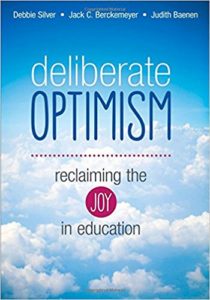 Dr. Debbie Silver is a learning consultant and humorist with over 30 years of experience as a teacher, staff development facilitator, and university professor. As a middle grades classroom teacher, Debbie won numerous awards including the 1990 Louisiana Teacher of the Year award. She speaks worldwide on issues involving education and is a passionate advocate for students and teachers. She is the author and co-author of four bestselling books, including Deliberate Optimism: Reclaiming the Joy in Teaching.














Good advice. I can’t stress enough the benefits of having a creative outlet or hobby. English teachers often read books they want to read to de-stress. Others (not just English teachers) paint, play an instrument, dance, knit, or do woodworking. Don’t wait until you retire.
Great piece! Such an important topic!