
Rethinking Accommodations and Modifications
A MiddleWeb Blog
 All of our students on IEPs have some type of accommodations; many also have modifications. Some of the accommodations are common across classrooms: repetition and review during classroom instruction; pairing verbal instruction with visual representations; and extra wait time in responding to questions.
But how do we implement these accommodations on a day to day basis, and what about the students in our co-taught classrooms who may not need these accommodations?
I think it’s important when we look at accommodations that we not feel locked in but consider them part of our “teacher bag of tricks.”
When we co-plan with our teaching partners, we can incorporate accommodations and modifications by varying our classroom instruction, teaching strategies and assessment measures.
What can accommodations look like in our classrooms?
Many of my students have repetition and review on their IEPs. Reviewing of new material benefits all students, but it can happen at many levels. In math, for example, my partner Aileen has daily Do Now questions for students to work on when they first arrive. While the kids are starting their Do Nows in their math journals, one of us is checking homework while the other is circulating and clarifying or ”translating” the language of the Do Nows (there are usually two problems).
If students can’t remember algorithms from the days or weeks before, we will remind them to go back into the reference sheets Aileen has created for them or perhaps refer to their vocabulary sheets. Next, kids will volunteer to share answers and present a strategy or technique they have utilized. Often kids have more than one way to solve a problem, so we will ask, “Did anyone do it in a different way?”
 This beginning-of-class activity is also used in science as a Science Starter. My teaching partner Suzanna writes a question based on the material from the kids’ class notes from the day before or their homework. (Example: __________ boundaries are a type of tectonic plate that move apart from one another. Draw a picture of an example.) When we have students share, we may also ask them to demonstrate with their hands how these two plates “diverge.”
In History, we have Weekly Trivia, which I’ve written about in an earlier post. It’s a series of questions created by the kids for their peers to answer. The level and depth of questions range from basic information to detailed, challenging content. During weekly lessons and discussions, my colleague, Pauline, will randomly sprinkle in some nickel questions (she passes out nickels to kids who recall or connect what we are studying to current events).
Modifications are different than accommodations
As we are all familiar, a modification is a change. If a student is given a test that looks different than the majority of his peers due to the addition of a word bank, or a reduction in the number of short answer/essay type questions, this is a modification. My ELA partner Paul often gives a modified test he creates for students who are struggling, speak another language outside school, or have difficulties on assessments.
Compare that to a student who receives preferential seating. That is an accommodation. “Preferential” in this case means a student is moved to be closer to the instruction and to supports. Many of our students don’t do well reading independently, so my science partner Suzanna has them pair up in class and they take turns reading and sharing, then we share as a class. This is actually an accommodation that helps all students. Students who read well can be paired with another student who reads well and they can discuss the information on a deeper level.
 We’ve also found that certain modifications we make can be beneficial to many or all of our students — in which case the modifications may morph into general teaching strategies. Here’s a good example: In English/Language Arts, Paul has our novels on CDs. He provides students with their comprehension work while they are listening and following along. This allows students who have decoding or comprehension disabilities a chance to not struggle with both the independent reading and the writing component simultaneously.
We once used books on CDs only for kids with disabilities. But we soon found that all kids could benefit from listening (instead of reading) while working on writing-related comprehension activities. For our students who read well, they can complete the written work as they listen and move into the deeper essay type questions. Differentiation.
When we do our station work, Paul will have small groups listening to the book, another group creating Stump the Expert questions (the kids try to stump us with questions from the book that we can’t answer, resulting in extra points on their novel tests), and a third group working on vocabulary and character puzzles. Flexibility.
Small groups and technology. Many of our students need to be in a small group for tests and quizzes as well as clarification of directions. We always give students a choice to go into the small group, and sometimes, as in Suzanna’s science class, they don’t need to leave because she quizzes them individually with oral questions.
We are very fortunate to have received a technology grant this year, and thanks to our principal Paul’s persistence, we have additional tech tools such as Mimio (a lower cost alternative to interactive white boards) and document cameras. If you’ve never used a document camera, it can be a phenomenal way to share examples of student work, projects, classwork answers, etc. and the kids love seeing their writing (and hand, and pencil!) projected on the board.
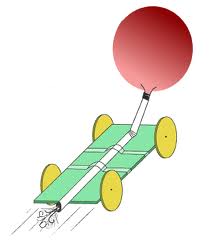 Three of my students have assistive technology in their IEPs, so they can use a laptop to type notes and written responses. In addition, my colleagues provide written notes for students who struggle with note-taking, although we still require students to do some written work, whether it is additional grammar practice in ELA or completing a set of cloze notes in Science. A template is provided for students in history for taking notes on films. We use our computer lab to complete web quests and for our Balloon car unit.
Alternate Assessments
Many of our students with learning challenges struggle on traditional paper and pencil tests. I think it makes sense to create alternate assessments that work for everyone. For example, in math, we have Do Now quizzes in which the focus is on organization, a goal on all of my students’ IEPs and a necessary one for all students in middle school. It simply requires students to refer back to a specific date in their math journals, copy Aileen’s math goal, and the answer to a problem along with the work. It’s an easy “A” grade for students who make sure their journals are up to date, and I keep a model journal on hand that they can use to catch up when they are absent. Here are some other examples:
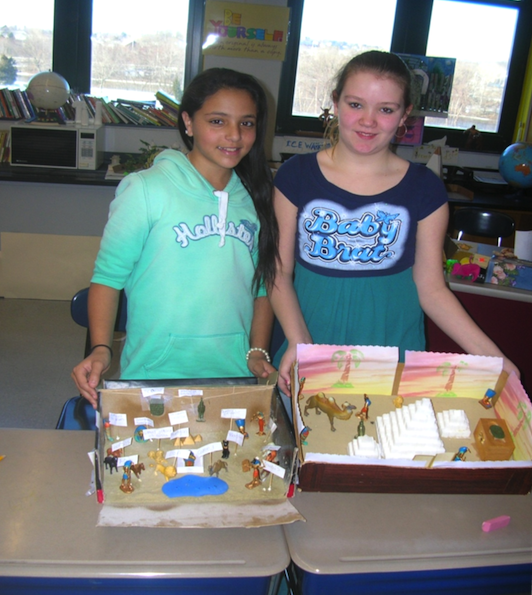
In History we have a 3D Model along with 5 facts shared aloud with peers during Project Presentation Days:
In English/Language Arts, the kids make life size character models complete with dialogue and artifacts:
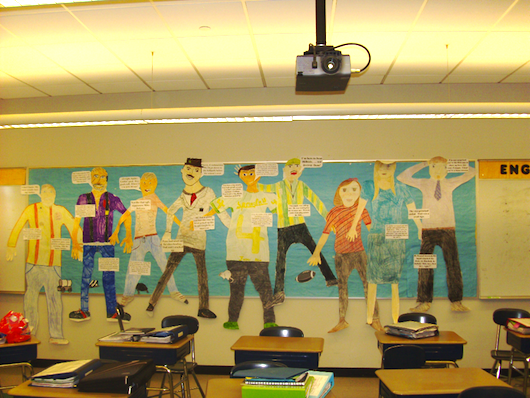
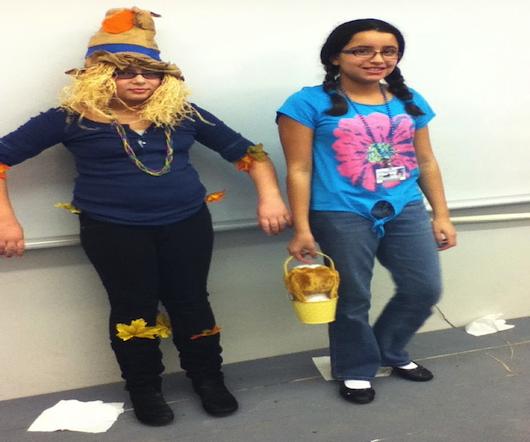
Students present a scene from a movie or play, complete with props and costumes they’ve made to their classmates. Here are two familiar characters, the Scarecrow and Dorothy from The Wizard of Oz.
Reflect and Rethink
As we rethink accommodations and modifications, it’s a way to take a reflective look on how to help ALL our kids who may not be able to show us their knowledge and understanding to best advantage in the traditional ways we’ve used at school. What kinds of strategies do you and your teammates use to help kids who may otherwise struggle to show what they know?















I am a sped teacher-high school level. Your blog sounds great. I think I can adapt your ideas.
I am special education teacher, serving as a resource teacher in an elementary setting. I like your blog. A lot of what you discuss above, I am already utilizing in my inclusion classroom. It feels great to see that others feel and are using the same techniques that I find feasible.
Ketrina
Thank-you so much for your lovely comments. I am so happy to hear you can adapt my ideas at the high school level. When I was first teaching in public school, I taught freshmen and sophomore kids with emotional and behavioral disabilities. It was a tough 3 years but they touched my life.
Rosalyn, how wonderful that you are enjoying the blog, and we are both utilizing the same teaching strategies. I am so happy that you feel they are feasible. Thank-you so much for your comments.