
Tagged: mathematics

Diverse students gather around a male facilitator as he writes on papers at a table, collaborating on a project.

3 Tutoring Moves That Enrich Math Learning

When math tutors create space to connect, speak and reflect, students not only gain confidence in their math skills, they strengthen their empathy and resilience and leave their sessions feeling capable, supported, and truly seen as learners, says tutoring expert Halley Bowman.

Crumbled white paper shaped like a brain on a grey concrete surface, with algebra formulas sketched on it (e.g., M =, y = mx + b).

Be a Shade of Gray in the Either/Or Math War

Teaching math through inquiry can be excellent. It’s a goal to aspire to. But for many struggling students, jumping straight into pure inquiry without any explicit instruction first can be paralyzing. Juliana Tapper’s Math Wars model helps teachers find the happy (gray) medium.

Are You “GPSing” Your Students in Math Class?

When we over-guide our math students, we don’t build understanding, we replace it, writes veteran teacher, author and math coach Pamela Seda. “We want students who, after leaving our class, can find their way – not students who are dependent on a voice telling them where to turn.”

Engaging Math Students in a Thinking Classroom

After her close study of insights from three leading math educators, Kathleen Palmieri took “a deep dive into what I had been doing in my classroom and flipped the stage to create a Thinking Classroom for my students.” See examples of how she’s moved from theories to practice.

Bringing a Lab Mindset to Group Work in Math

What if we approached math as an experimental subject and encouraged students to work together to solve problems using a “lab mindset”? Fifth grade teacher and NBCT Kathie Palmieri has been exploring science and math standards with the power of collaborative learning in mind.

Challenging Harmful Beliefs in Math Class

To move toward equitable mathematics education, Dr. Lidia Gonzalez shows how math teachers can help students see beyond harmful beliefs by answering 3 questions: “What is mathematics?”, “What does it mean to be good at math?” and “How do we see our math development over time?”

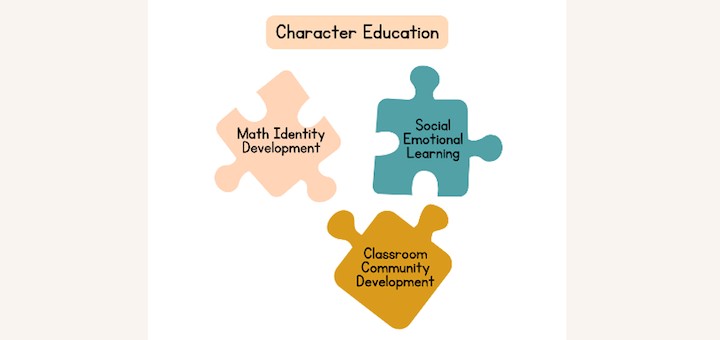
Math: the Perfect Place to Teach Character

In math class students can be challenged to build both their character and their math proficiency if we adopt the roles of cultivator and guide. Mona Iehl calls on teachers to follow the principles of ECHO and help each student embrace a leadership role in the learning journey.

How to Differentiate the Teaching, Not the Task

Mona Iehl once labeled her math students high, medium or low and gave them different problems. Now she thinks about differentiation as the amount of support she offers so that every student gradually reaches grade level expectations working the same problems. Here’s how.

Stop Using These Four Words in Math Class

To reduce confusion, math professor Dan Ilaria recommends: Stop saying “cancel” and use “name the operation.” Stop saying “plug in” and use “substitute.” Stop saying “reduce” and use “rewrite.” Stop saying “cross-multiply” and allow students to make sense of what they are solving.