Assess Students Using Projects & Performance
 By Barbara Blackburn
Performance-based assessments are a type of summative assessment, but they differ from traditional testing. They are focused on students performing in some manner to demonstrate their understanding.
Typically, performance-based assessments are more rigorous, because students must go in-depth to complete the performance, project, or portfolio.
Let’s look at two specific types of performance-based assessment: performances and project or problem based learning.
Performances
Performances encompass a wide range of activities, some of which can be incorporated in project- and problem-based learning and portfolios. The main distinguishing characteristic is that students actually perform in some manner to demonstrate understanding.
For example, former middle school teacher Kendra Alston shared a performance activity she experienced during high school, in a social studies class. She wasn’t excited to study the 1920s and 1930s, but her teacher, Mr. Baldwin, told students he was giving a show me what you know final exam.
“He didn’t care how you showed it, as long as you showed what you know. Things flashed before my eyes, but I was into theatre. So I researched the vaudeville circuit at the time and found Bessie Smith in theatre. She was a blues singer who sang in speakeasies; and I learned about the 20s and 30s through her eyes. On the day of the exam, I came in singing, staying in character. He asked questions and I answered based on what Bessie Smith would have said.”
Notice how rigorous the assessment was. She had to demonstrate far more understanding than simply answering a question. Also notice her enthusiasm for the “test.” She still remembers it!
Other Sample Performances
• Oral Presentations
• Reader’s Theatre
• Exhibitions
• Essays
• Multimedia Presentations
• Debates
• Role-Playing
• Experiments
Now, let’s look at a sample of a rigorous performance.
 Middle School Science Example
Using their knowledge of past catastrophic events that have affected the Earth and life on earth such as earthquakes, volcanic eruptions, weather devastations, and asteroid contact, students must predict the next catastrophic event that is likely to occur.
 They must also support their prediction with a minimum of three sources other than the classroom text.
The student will present this information in the form of a live classroom presentation or by electronic submission in a form the entire class can review such as Blackboard or Canvas.
Project- and Problem-Based Learning
Project-Based Learning and Problem-Based Learning are effective strategies for helping students apply their learning and demonstrate their problem-solving skills. Let’s start by looking at project-based learning, and then turn our attention to problem-based learning. Project-based learning is exactly what it sounds like. Students create an in-depth project to demonstrate their understanding.
Middle school teacher Jessica Guidry designed an ecology unit for her science classroom that utilized project-based learning. Her South Carolina students were introduced to the unit with the following task:
You are an ecologist from Rock Hill, South Carolina. Recently, members of the United Nations have come together and decided that they must eliminate one biome to make room for the world’s growing human population. You and a group of your peers have decided to take a stand.
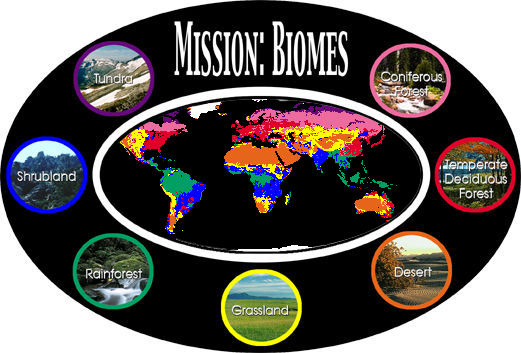 You will each choose one biome to present to the United Nations in New York City this April. It is very important that you persuade the members of the UN to keep your chosen biome alive! The UN has asked that you write a persuasive essay to present to the audience. They also asked that you bring visuals and information about your references. You must be sure that you include how your biome benefits the world population. You need to include information about the habitats, populations, animals, plants, and food chains of your biome.
Throughout the unit, Guidry integrated a variety of other open-ended activities, such as creating a flip book on their biome, participating in a debate, and creating food chains/webs in addition to the regular mix of lecture, guided discussion, and laboratory activities. The overall focus on an open-ended project for groups, however, was the driving force for the unit. Rigorous? Yes!
Other Sample Projects
◆ Select an insect mascot for your school. Research the insect and create a realistic mascot. Craft a multimedia presentation to present your creation.
◆ Choose an issue in history, such as the Civil Rights Movement or the Equal Rights Movement. In groups, create and perform an original composition. Depending on the age of your students, they might draw a cartoon strip, write a song, or create a video.
 ◆ Imagine you are a group of spies. Your job is to crack a coded message that has been intercepted from the enemy detailing the plans for an attack. Your group needs to crack the code, find the coordinates of the attack location and any other plans, and send a coded message to your supervisor.
◆ Your job is to use everyday items to create a new invention to present to a group of venture capitalists, who will decide whether or not to fund you. Design your invention and develop a creative way to present it.
Problem-Based Learning Experiences
With problem-based learning, there is more control with the students. They generate questions based on a standard or essential question, and then discover the answer through their own research. This doesn’t mean that you allow them to stumble through the project on their own; you’ll need to guide and facilitate as well as frame parts of the activity to provide a loose structure.
As an end result, students choose to demonstrate their understandings in a creative way such as videos, blogs, reports, models, experiments, infographics or metaphors.
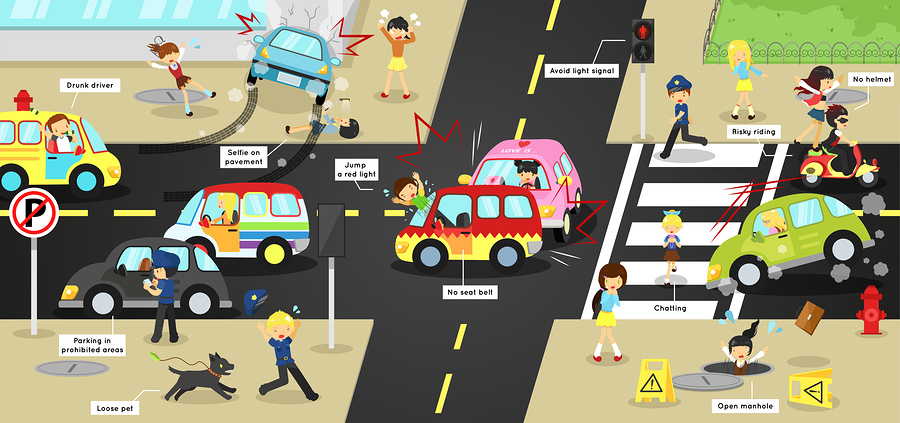
In an area middle school, there was an accident that occurred near the school. Students wanted to prevent future accidents, so they worked in groups to develop a safety plan for drivers. In addition to creating safety information, such as brochures and a short video, groups also worked together to petition for a stoplight at the intersection to make the area safer.
Conclusion
Performance-based assessments are an alternative to traditional summative assessments. They are often more rigorous because they allow students to show their learning in a more in-depth way.
______________________________________________
 Barbara Blackburn was named one of the Top 30 Global Gurus in Education in 2017. She is a best-selling author of 16 books including Rigor is Not a Four Letter Word and most recently Rigor and Assessment in the Classroom.
A nationally recognized expert in the areas of rigor and motivation, she collaborates with schools and districts for professional development. Barbara can be reached through her website or her blog. Follow her on Twitter @BarbBlackburn.