Use Goal Setting to Grow Great Student Writers
Veteran teacher, coach, and children’s author Valerie Bolling’s cycle of writing success goes like this: Set Goals. Work Towards Goals. Monitor Progress on Goals. Repeat. We’ve asked her to show how this cycle can work in your classroom.
By Valerie Bolling
 We all have so much to do, professionally and personally, and I’ve found that setting goals helps me accomplish my never-ending lists of things to do, including – so far – writing more than a dozen books for kids.
When I began to write my first book for teachers, I also set goals for how much I planned to write – one chapter a day. Since I was fortunate to be awarded a week-long writing retreat, I was able to focus solely on my writing during that time. Even if you and your students aren’t at a writing retreat, or are not writing a book, you too can – and should – set goals.
Writing goals are a great way for students to identify and choose what they could improve in their writing and how they’ll set specific goals to work on. Most important, during the process students will be able see the growth they’ve made as writers – and as goal setters.
How can we make sure our goals, and our students’ goals, result in success? Usually, we set goals about what we’re going to do but not necessarily for how we’re going to get there. When it comes to writing, students tend to write without reflecting on themselves as writers, and they sometimes turn in assignment after assignment without getting much feedback on how to improve as writers.
When they do receive feedback, they are rarely held accountable for implementing it by re-doing the assignment or applying that feedback to the next assignment. Even worse, they may have a new writing assignment due before they’ve received feedback on the previous one.
What if we did something to shift the cycle? What if students use what they know about themselves as writers – and the feedback they’ve received about their writing – to create goals and then work on those goals?
You, their teacher, can facilitate and guide them through this process – keeping students at the center – so they have agency in choosing their own goals, independence as they reflect upon their goals and progress, and success as they achieve their goals and grow as writers. Here’s how.
Set Goals
How do you and your students get started? First of all, start with an introduction to goal setting and why setting goals is important. Have students reflect on when they’ve set goals in the past, and then link this to setting writing goals, which they’ve likely not done before.
Before they set goals, they should take stock of who and where they are as writers. Where do they shine as writers? What skills could they improve? Since the goals students set will focus on areas of improvement, it’s helpful for them to look at their writing – including assignments on which they’ve received feedback from you and peers – because that will inform their decisions about where they might want to focus their efforts.
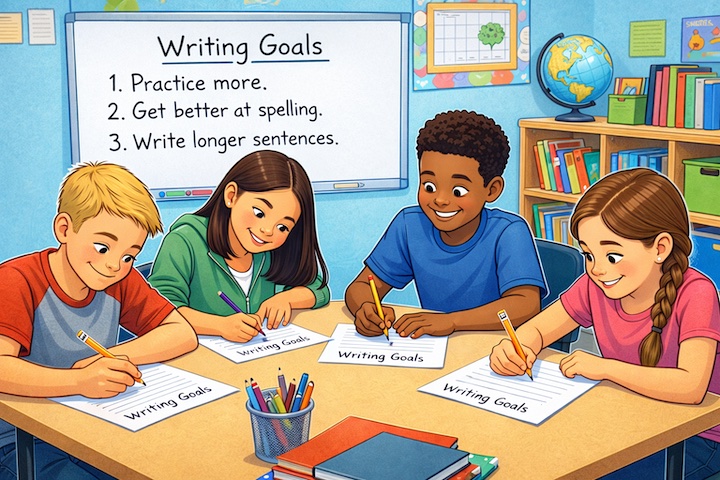
Once students have an idea of what they’d like to work on, then they can move on to writing their self-selected goals. It’s important that students set their own goals; they shouldn’t be chosen by you. This not only increases student buy-in and motivation but leads to agency, independence, and, ultimately, success. Students can use this free organizer from my book to record their goals.
In addition to coming up with goals (the what), you will see that the organizer requires students to determine specific strategies they will use to work on their goals (the how). Goals without strategies for achieving them are like hopes or wishes. They’re a good start, but they likely won’t get the job done. Goals need to be accompanied by strategies; that combination leads to success.
Work Towards Goals
The best way to encourage students to work towards writing goals is to make sure you provide targeted writing instruction and plenty of opportunities for students to write and receive feedback on their writing from their peers and from you.
Certain assignments may be designated as those during which students will focus on one of their writing goals. Then, in addition to receiving comments on the content and quality of the overall assignment, students will also receive feedback about how they worked on a particular, self-chosen goal in that assignment.
Of course, the best way to work on any goal is to do it consistently, so encourage your students to be aware of their writing goals anytime they’re writing in your class, in their other classes, and even outside of school. As I say in Goal-Setting in the Writing Classroom, “Goal setting works best when we are continuously chipping away at our goals, rather than just revisiting them once in a while.”
Monitor Progress on Goals
Monitoring is an essential part of the goal-setting process. Students should reflect on their goals and provide evidence of how they’ve worked on them and/or why they may still need to continue working on a particular goal.
Make sure you create time and space for reflection and monitoring. To see their growth, students will need to look back at assignments they worked on earlier in the year as well as those that are more recent. In addition to their own thoughts, the feedback they’ve received on their writing from you and their peers will be integral to them determining how they’re progressing. Students can use this goal monitoring form to record their progress.
During this time of reflection and monitoring, students should think about their goals in three categories:
- First, they should celebrate any goal(s) they’ve achieved. The celebration can be as simple as a victory dance.
- After celebrating, students should create new goals to replace those they’ve accomplished, so they can continue to improve as writers.
- Next, students should take stock of goals they didn’t achieve and decide if they want to abandon them altogether and select new goals or if they want to make a change. For example, perhaps the goal should remain, but the strategies may need to change.
It’s also possible they just need to focus more on their goals, working more diligently on their strategies. They may even need some assistance – either from you or a peer.
Repeat the Cycle
Goal setting is a recursive process. It is not something that is done once and then forgotten. In fact, this is why goals aren’t achieved sometimes. People often set goals and don’t make a commitment to work on them or to return to them to reflect and monitor their progress. Therefore, be sure that these three things are happening consistently in your class:
- Robust writing instruction, which also includes small-group instruction, teacher conferences, and peer feedback.
- Frequent opportunities for students to engage in a variety of writing activities.
- A focus on writing goals that includes time for reflecting upon those goals, making changes to them, and celebrating successes.
If this process works for you and your students, which I expect it will, please be sure to share it with others. Encourage your colleagues to join you in this work, so that more students can experience agency, independence, and success as writers.
When to Have Students Set Goals
Goal setting often occurs at the beginning of the school year, but you can set goals at any time. If you’re reading this article in January, that’s a great time to set goals at the start of the calendar year. However, goal-setting can even occur in March or April as a way to motivate students to make improvements before the end of the school year. Regardless of when you guide your students through this goal-setting process, I wish you and them much success. Now go forth and set goals!
Illustration: ChatGPT 5.2
Valerie Bolling is an award-winning educator and author. She was a classroom educator for 30 years who started out teaching grades 2, 4, 5, and 8 and then moved on to planning professional development and working as an instructional coach with middle and high school teachers.
 Valerie has been writing books for children for six years. Goal Setting in the Writing Classroom: Building Student Agency, Independence, and Success is her first book for educators. Other upcoming professional books include Writing Poetry Month by Month: Inspiring the Poet in All Students (2026) and The Writer’s Voice: Using Picture Books as Mentor Texts to Build Students’ Skills as Writers, co-authored with Pamela Courtney (2027).
A graduate of Tufts University and Teachers College, Columbia University, Valerie has always loved teaching and writing, and she enjoys connecting with both children and adults and inspiring them to write their own stories. Visit her website. And follow her on Facebook and Instagram.