Expository Writing: The Field Guide Project
By Stephanie Farley
 One of the advantages of being a teacher is that I get to spend my time thinking of ways to spark joy and wonder in my students. To that end, I love developing curriculum and planning lessons.
I know! I might as well profess I love washing dishes. Yet, I really do enjoy the process of considering how I can create units, lessons, and assignments that beckon to the strengths and preferences of each of my students.
The driving pedagogical principle of the gifted, neurodiverse school where I currently work is “strength-based.” What this means is that – as I plan curriculum – I evaluate the extent to which assignments allow each of my students to demonstrate their learning in a way that suits them best.
In other words, even though I’m teaching writing, I also have to consider how, for example, my visual learners – those who are great with images but may struggle more with putting sentences together – can show what they know and be proud of that work.
An often unacknowledged element of differentiation is that some kids just don’t like it. They don’t want to wear headphones to listen to text or produce a podcast instead of a paper. They would rather fit in, go unnoticed, and simply do what everyone else does, even when it’s hard or frustrating.
This just-leave-me-be reality creates an extra level of challenge in planning, as I endeavor to make all the options in process and product equally valuable and appealing. When I get the blend right, there’s no better feeling.
The unit I’m about to launch
The unit that I’m introducing to my students right now, in early January 2026, is one of those times when I think I may have struck gold. I don’t typically write about projects as they’re happening (I prefer to wait and see what the results are), but I’m kind of excited about this unit and I thought it would be fun to share it with you, in almost real-time, so we can see if my theories about differentiation for this group of students work out.
First, a little context: my goal in semester two as a 9th grade English teacher is to move my students from happily writing fiction to happily writing expository pieces.
All English teachers know the pain of coaxing students to write “essays.” It’s like trying to convince a child that going to the dentist is fun. But students must write for all kinds of occasions and it’s important for them to understand the conventions and structures of personal narratives, current events stories, and opinion pieces.
So, in practical terms, I need performance-based summative assessments that allow my students to demonstrate their understanding of expository writing conventions. With that in mind, I’ve considered the host of strengths across my student roster:
- visual-spatial awareness
- kinesthetic proficiency
- mechanical/engineering competency
- strong quantitative reasoning
- superior reading comprehension
Consequently, the unit needs to offer a pathway for success for each of these learners. Plus, I have a special challenge, which is that the prior options I have offered for students with strengths in the visual-spatial realm unfortunately did not appeal. In case you’re wondering, those options included creating a comic, a storyboard, or animation instead of a short story.
Finally, I should mention that I tend to focus on project-based and experiential learning. I plan the summative assessment first, based on learning targets, then design backwards from there.
Launching the Field Guide Project
The project the students will undertake in order to learn expository writing skills is called the Field Guide Project. In it, students will create a “field guide” to any topic they like.
It might, for example, be a field guide to breakfast burritos, hiking, or dragons. Students will have to write four different kinds of pieces for the field guide as well as produce accompanying images for each written piece, and they can choose these four from the following content types:
- Investigative report
- News/current event story
- Feature story
- Interview/profile
- Personal essay or creative nonfiction
- How-to
- Review
- Short story
You’ll say a short story isn’t expository writing, and of course you’re right. I jammed the short story in there so those students who wish to continue writing fiction have a chance to do so.
The visual component is handled by allowing students to produce videos for any or all of the pieces. The learning targets for the project include thesis, supporting details, vocabulary, and voice, so they are easily transferable to a video format rather than a written format.
I’ve offered choice about length as well. Students can write “long” or “short” pieces, with the caveat that if they select “short” pieces, they’ll have to write more of them. In this case, a “long” piece is 750-1000 words.
I haven’t done this project with students before, so I created a few exemplars. One of them is linked in the project guidelines, and below is a picture of the physical exemplar I created.

In terms of instructional content, I will use class time to teach students the various styles of writing, the conventions for each style, and offer plenty of examples pulled from newspapers, magazines, anthologies, blogs, and published field guides (did you know there’s a 2025 Preppy Handbook?!). My intention, as always, is for students to learn by doing, so instruction will focus on what they need to learn in order to achieve their writing and publication goals.
If you’re interested, here’s a link to the project guidelines. As you’ll see, I’ve created a thread for each of the content types.
Why I think this project will work
The reason I think this is a solid strength-based project is that I believe there are options for all learners to shine.
Visually-oriented students can focus on the visual language of the field guide through images and design, while the engineers can create a schematic for what they’d like to build and write a short piece to explain the schematic (and of course I always welcome actual building!). Further, those who prefer speaking to writing can create videos that explain or persuade.
My hope is that all students have the opportunity to create a field guide that speaks to their strengths and interests while allowing them to demonstrate their learning.
Finally, I’d love to know what you think! What am I missing? Let me know in the comments; I’ll gladly take your advice! I’ll share the results as the class progresses. I can say that so far, the idea of producing videos has been enticing and plans are underway for scripts! Oh, and I had planned that the project would take about 12 weeks, but students are telling me they can jam this out in 5 or fewer, so stay tuned on the timeline.
I’m excited to learn your thoughts about my attempt at a strength-based yet smooth approach to differentiation.
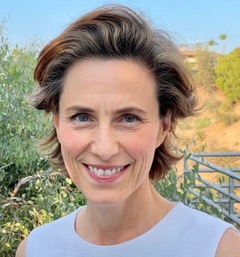
 Stephanie Farley has been an administrator/teacher for 30 years. Her current role is Director of Teaching and Learning at a school for gifted, neurodiverse students. She also teaches a ninth grade English class. Stephanie, who is interested in instructional design, assessment, feedback, and grading, has served as a Mastery Transcript Consortium Site Director and has been on a number of California Association of Independent Schools accreditation committees.
Stephanie’s first book is Joyful Learning: Tools to Infuse Your 6-12 Classroom with Meaning, Relevance, and Fun (Routledge/Eye On Education, 2023). She’s created professional development for schools around reading and curriculum and coached teachers in instruction, lesson planning, feedback, and assessment. Visit her website Joyful Learning and find her other MiddleWeb articles here.