
Now’s the Right Time to Teach the Work Ethic
A MiddleWeb Blog
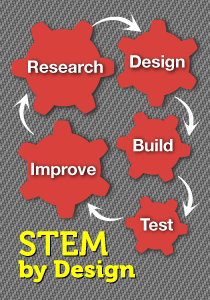 Future 21st century workers will need a deep understanding of science and math to solve the world’s problems. So that’s what STEM teachers need to be sure kids are equipped with when they leave school. Right?
Well . . . partly right. Certainly that’s a big focus of any STEM program – equipping students with a deeper grasp of the knowledge they need to succeed. But if you ask a sizable sample of industry and business owners, as researcher Matthew T. Hora did, you might get a different answer.
In his recent post for the Harvard Education Publishing Group, “Work Ethic and the Skills Gap,” Hora writes: “I was struck by how often I heard about problems with employees’ work ethic.”
He points out that traits such as “dependable,” “punctual,” “hard-working,” and “committed” were considered the most important competencies by the 72 biotechnology and manufacturing employers he interviewed.
One CEO remarked, “If they don’t have the work ethic, I don’t have anything to work with.”
The good news is:
All teachers in the school can work with students to help build those traits. Imagine an intentional, coordinated work ethics program that’s consistent across subjects and grade levels. Wow, what a difference that could make over time!
Those personal traits, beliefs, and aptitudes could begin to become ingrained in kids. (Note: a preferred approach would be to involve parents as well, since personal values and expectations are shaped at home and within cultural settings.)

So, what particular traits does STEM education cultivate? And how can you help your students get ready for the real world? Here are seven work-ethic traits to consider. As you read these, take a moment to reflect on your students’ present status in each of these goal statements.
1. Curiosity is alive and well in my students.
 How much curiosity do your students show? Curiosity is the main activating force behind learning. It drives kids to be aware, check things out, experiment, and interact with their world. It encourages them to venture into the unknown and make discoveries. Curious kids rock!
What are some ways to ignite (or reignite) curiosity in your classroom? Here’s a quick laundry list of ideas:
Let your students know that you welcome their questions. Slow down and give students time to inquire and explore. (Note that high stakes standardized testing is the enemy of curiosity and other work ethic traits.)
Model curiosity … wonder about things out loud. Use discrepancies to open class. Stimulate their thinking with unexpected and unpredictable activities and content. Ask questions that stir their curiosity. Facilitate, challenge, and encourage students into active engagement. Inquiry-based STEM learning can create a Curiosity Classroom.
To think about: Fear, anxiety and disapproval kill curiosity. Your attitude and approach can nurture or destroy your students’ curiosity.
2. Creative thinkers flourish in my classes.
 Creative thinkers give birth to new ideas. They come up with innovative and imaginative products, applications, and solutions.
How can you stimulate creativity in students? Be sure your classroom is a “safe” place to express new, “off the wall” ideas. Use inquiry-based teaching. Give students opportunities for making stuff as part of their assignment. (This works particularly well for STEM projects.)
Recognize the work of small-group design teams that showcase different ways of solving the same problem. To the extent possible, allow plenty of space for movement, collaboration, and exploring. Make your class The Imagination Capital of the school.
Some ways to kill creativity: Always follow a traditional teaching method. Expect just one correct solution. Ask questions that have “right” and “wrong” answers. Keep students seated in straight rows and working individually.
3. My class features self-directed students.
 Students who are self-directed can keep you sane. They take initiative and responsibility for their own learning. They feel ownership in projects and are persistent in reaching goals.
What are some ways to increase student self-reliance? Allow students to set their own goals (within instructional objective boundaries) and decide what they need to learn about in a given situation. For example, students might decide what science information they need to learn to solve an environmental issue.
Kids become increasingly self-directed when they make decisions, collaborate, and experience success, so design lessons that give students those opportunities. STEM classes, with their PBL approach, create high-engagement centers that build self-reliance and announce, “This is a Do-It-Yourself Center.”
DON’T do this! Don’t always tell students what to study and learn, what their goal is, or how to do things. Get off the stage and let your students have a chance to be self-directed.
4. My students detect problems.
 One thing today’s employers stress: we not only need problem-solvers, we need a workforce that can recognize a problem and accurately define it. Think about that. Your kids can look around their homes, school, and communities and spot needs, problems, and wants. Guide them to focus on their surroundings and keep their eyes open for ways to improve things.
Students can gather information by talking to members of the community, organizations, etc. When they identify a problem, help them clearly describe and document the problem. That’s their starting point for finding a solution. When kids realize they can have an impact solving a problem, they learn to keep their eyes open for needs and to expand their vision to a wider community. Your classroom can be The Kids Detect It Hub.
Beware: Telling kids what problem to solve will not help them learn to ferret out the problems for themselves.
5. My students are first-rate deciders.
 Students need to be able to gather, select, and use relevant information to make knowledgeable, research-based decisions to solve a problem. So say the employers!
Rather than just having them pore over print material and take notes, involve them in other methods of getting information: science investigations, digital investigations, and talking with experts, to name a few. (See 3 Ways to Make Research Fun.)
Students must be able to bring together details from many sources to make educated decisions. And – especially important – help them learn to discern the quality and truthfulness of the information they encounter. Your students may become known as The Elite Deciders Squad.
Attention: The research that kids are doing should tie in with their course content objectives. This helps them go deeper into those objectives, and ties what they are learning in class to real world problems and solutions.
6. Collaboration is the way we do business in my classes.
 Students need lots of experience in productive teamwork and collaboration. Employers want workers who are open-minded about different ideas, listen carefully to others, and practice good social skills. They want people who work in teams successfully and use self-control – especially in disruptive situations.
Preparing kids to work together successfully in teams plays a critical role in STEM classes. You can get a free downloadable Student Teaming Tips guide at my website. Focus on becoming The Collaborative Classroom.
No, No! Don’t put kids together in teams without clear guidance and practice in being productive team members. Develop a way to continually assess their teamwork.
7. We are communicators.
We must turn out students who can communicate clearly and accurately. This is a good opportunity to work with other subject area teachers to develop a consistent schoolwide plan for building communication skills. Develop a school reputation as The Communication Headquarters for your district.
Overcoming the work ethic gap begins with you
Of course, you’ll notice that STEM curriculum is perfectly suited to develop all these skills associated with a strong work ethic. If you’re teaching STEM, you’re well positioned to help your school begin filling the work ethic gap that so many industry and business leaders are worrying about today. And if you’re NOT teaching STEM, you can certainly see how many of these strategies can enliven and enrich your classrooms, too.
___________________________________________________
 Anne Jolly’s recent book, STEM by Design: Strategies and Activities for Grades 4-8, is published by Routledge/Eye On Education, in partnership with MiddleWeb. Receive a 20% discount with code MWEB1 at the Routledge website.
From the Amazon description: “This practical book…has all the answers and tools you need to get started or enhance your current program. Based on the author’s popular MiddleWeb blog of the same name, STEM by Design reveals the secrets to successful lessons in which students use science, math, and technology to solve real-world engineering design problems.”
















I especially like your idea that teachers should “wonder aloud.” We’ve heard from the CEO’s, and I agree we need to instill a work ethic that seems to be missing in many places.
I agree with you, Mary. Instilling a work ethic means involving kids in the kinds of situations (active, hands-on) that call on them to make good decisions and gain confidence. Above all, it means being consistent.
I, too like the “wonder aloud” idea. My students would listen to me talk to myself much more readily than they listened to me talking to them!