Teaching and learning in grades 4-8
Sharpening our reasoning powers about when and how to engage with artificial intelligence will serve us and our students well as we navigate whatever the future brings, says Brett Vogelsinger. He offers two lesson ideas we can use to model quality reasoning during AI interactions.
Not Your Granny’s Grammar offers a fresh, engaging, and practical approach to grammar rooted in authentic writing practice. It’s well organized to guide teachers through the philosophy, structure, and application of a comprehensive grammar study, writes NBCT Kathie Palmieri.
More state legislatures are developing media literacy policies in response to debates over student phone use, social media restrictions, and artificial intelligence. But are they committed to supporting programs that engage all teachers in opportunities to teach media literacy?
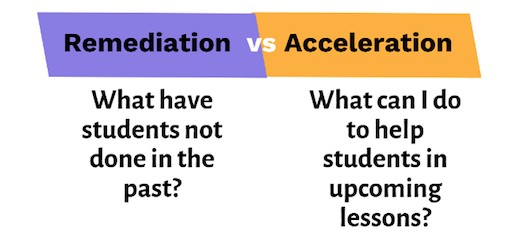
Acceleration means providing grade-level instruction with strategic scaffolds and just-in-time support. It means believing all kids can access rigorous content with the supports you can build. And it’s a decision entirely within your Circle of Control, says Dr. Sonya Murray.
Building on her previous writings redefining rigor in education, teaching coach Barbara R. Blackburn shares fresh tools, strategies, and insights to add rigor to your teaching in ways that are meaningful, engaging and appropriately challenging for all students.
Many educators believe we can increase engagement and improve attendance by expanding choice electives for their middle schoolers. But school and system wide? What about scheduling? What about staffing? Jen Schwanke walks us through her district’s transformation step by step.
When you climb to the top of a mountain, the steps become increasingly difficult as you go, but the view is worth it. Consultant and author Barbara R. Blackburn shares five models for organizing higher levels of questions to help students reach the learning summit.
“The Classroom of Choice” is perfect for teachers seeking ways to strengthen their classrooms and curriculum using Choice Theory so students thrive as learners and humans, says MS teacher and NBCT Angela Lee. Each chapter has specific, ready to use, research based strategies.
The deficit atmosphere in schools – unsustainable workloads, lack of resources, minimal supports, terrible pay – contributes to culling, writes Dina Strasser. Rather than seeing a complete image of our lives, the dark and the light, we’re at risk of letting our empathy leach away.
As AI becomes omnipresent in schools, Matt Renwick suggests ways to make sure it benefits you and your students. Included: current AI education research; ways to make AI use intentional, and a guide to developing a unit of study that engages students in AI tools and ethics.