Dystopian Fiction to Stretch Students’ Minds
By Kasey Short
 Middle school students are often drawn to dystopian literature. These stories are filled with conflict, rebellion, survival and teen characters who challenge authority and seek truth and justice.
While capturing students’ attention, this genre is thought-provoking and provides opportunities for them to explore our world today, examine relevant themes, develop empathy, and consider multiple perspectives.
Incorporating dystopian literature into middle school English classes allows teachers to engage students with their curriculum while also providing opportunities for students to examine humanity through the lens of fiction.
Dystopian literature serves as a mirror to reflect the challenges and concerns of our current and/or historical societies while examining topics such as power, justice, freedom and authoritarianism, resistance, equity, environmental concerns, privacy, misinformation, and identity. These stories also often have strong teen protagonists that can inspire readers to consider how they can help shape the future.
Suggested Discussion Questions
- What elements of the story make it dystopian?
- How does the dystopian society in the story compare to our current society? Examine how they are similar and different.
- What role does technology play in the book? Does it have a more positive or negative impact on the community?
- What role does government play in the book? Consider what the government wants, how they go about achieving their goals, and how that impacts the society.
- What warnings and messages do you think the author is trying to convey to the reader? Consider what lesson you think they hope readers gain from the story.
- How would you respond if you lived in this society? Would you resist or adapt?
- Who benefits in the society and who is harmed? Why do you think that is the case?
- What patterns or events in the story relate to historical or current events?
- How does the protagonist challenge authority?
- Who has power in the society? What gives them this power?
- How does the environment and climate impact the story?
- What year is this story set? How does that impact your reading of the story?
Suggested Activities
1. Current and/or Historical Event Connection: Students research real world events from history or current news that relate to dystopian themes, discuss similarities, and brainstorm solutions to avoid pitfalls seen in dystopian literature in our world today.
2. Moral Dilemma Debate: Debate key issue(s) from the book such as it is possible to create a society where everyone is equal, should we place limits of technology development, etc.
3. Survival Plan: Create a survival plan for surviving the dystopian society.
4. Create a Resistance Movement: Design a rebellion different from the one in the story to fight against the injustice in the story, including a symbol, slogan, strategy, and speech to encourage others to join.
5. Creative Writing: Write a short dystopian story that reflects a lesson the student would like to share with their peers connected to our current society.
Suggested Dystopian Novels
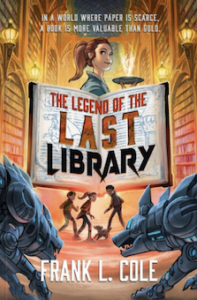 The Legend of the Last Library by Frank Cole – This is great introduction to dystopian literature for younger middle grade students. It is set in a world where all the trees were destroyed, making paper extremely valuable and paper books obsolete. When Juni discovers an entire book, it leads her on an adventure to find what may be the last library. This book shows a glimpse into a terrifying future where one corporation controls all information flow and underscores how access to information is essential for society.
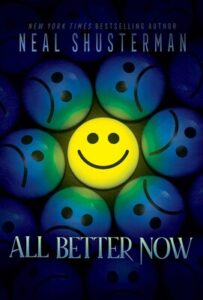 All Better Now by Neal Shusterman – Another fantastic near dystopian/science fiction book by Shusterman that weaves in recent issues such as the Covid Pandemic to make it feel real to the reader. This story follows multiple young people as they navigate a pandemic that has a very high mortality rate; however, those that survive the illness become euphoric.
As more and more people survive all their consumerist habits, they see the world drastically changes. These changes threaten a society that is built on power and greed and inspire Margot to create “cure” that may be much worse than the illness. Showing multiple perspectives throughout the book encourages readers to critically examine their own views of how they would handle this pandemic.
 The List by Patricia Forde – This story is set in a time after climate changes have caused a disastrous flood and people are only allowed to speak 500 different words. As the newest Wordsmith, Letta is learning to read forbidden words. Through that experience she gains fresh insights and ultimately chooses to put herself at risk to fight for words. This book shows the danger of censorship, the importance of free speech, and the magical power of language.
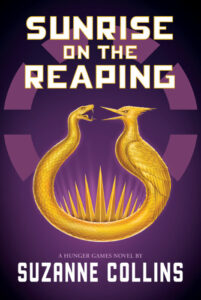 Sunrise on the Reaping by Suzanne Collins – The newest book in the Hunger Games universe (it’s the second prequel) provides readers insight into Haymitch’s experience fighting in the hunger games during the Quarter Quell. As with the other Hunger Games novels, Collins’ work encourages readers to consider the impacts of propaganda, cost of war, consequences of unchecked power, human nature, and importance to stand up against injustice. Her newest novel will inspire younger readers to seek out the rest of the Hunger Games novels
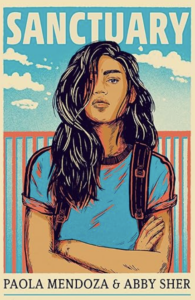 Sanctuary by Paola Mendoza and Abby Sher – Sanctuary, set in the near future of 2032, presents a world where everyone is chipped and tracked by the government. Vali is an undocumented immigrant who is trying to remain undetected after her mom’s counterfeit chip malfunctions and the Deportation Forces raid her town.
She finds herself traveling across the country with her younger brother to find safety in a sanctuary state. This book warns of the danger of oppressive governments and advanced technology used for human surveillance while also showing the power of resistance and the strength of communities that help one another.
More Dystopian Novel Suggestions
 The Marrow Thieves by Cherie Dimaline
The City of Ember series by Jeanne DuPrau
The Middler by Kristy Applebaum
Divergent series by Veronica Roth
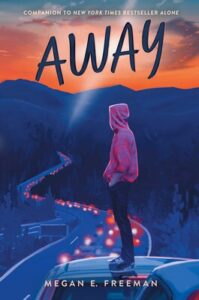
Away by Megan E. Freeman
Jenna Fox Chronicles by Mary E. Pearson
 Arc of Scythe series by Neal Shusterman
The Last Wild by Piers Torday
The Giver by Lois Lowry
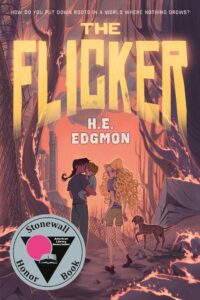
The Flicker by H.E. Edgmon
D-39: A Robodog’s Journey. by Irene Latham
The Unexplainable Disappearance of Mars Patel by Sheela Chari
Dystopian Short Stories
“Harrison Bergeron” by Kurt Vonnegut
“The Lottery” by Shirley Jackson
“The Pedestrian,” “All Summer in a Day,” “The Sound of Thunder,” and “The Velt” by Ray Bradbury
“The Last Curiosity” by Lucy Tan
“Examination Day” by Henry Slesar
Encouraging students to develop agency
Teaching dystopian literature offers students a meaningful way to engage with literature while developing critical thinking and analytical skills. These stories challenge their views while encouraging them to develop agency and make productive change.
By engaging students in thoughtful discussions and engaging activities and providing various books and suggestions, educators can use dystopian literature as a tool for learning English Language Arts skills while inspiring students to examine our current society and what role they want to play in their community.
Kasey Short is the Middle School Director of Studies and an 8th Grade English Teacher and Advisor at Charlotte (NC) Country Day School. She loves to share ideas from her classroom and her leadership roles.
Kasey attended the University of North Carolina at Chapel Hill where she earned a bachelor of arts in middle school education with a concentration in English and history. She went on to earn a master’s in curriculum and instruction from Winthrop University.
Browse all of Kasey’s MiddleWeb articles here and follow her at Bluesky.