Teaching and learning in grades 4-8
A just-crafted clay dino from seventh grader Gil reminds Dina Strasser that middle graders need unstructured time under the careful but non-interfering eye of a teacher who is trained to watch, listen and learn. Making room for such time is a challenge that’s seldom met.
Ready to leave Granny’s snooze-inducing grammar lessons behind? Three simple yet powerful changes in grammar instruction can make a big difference in how students use grammar as a creative tool to shape their writing, says literacy coach and teaching consultant Patty McGee.
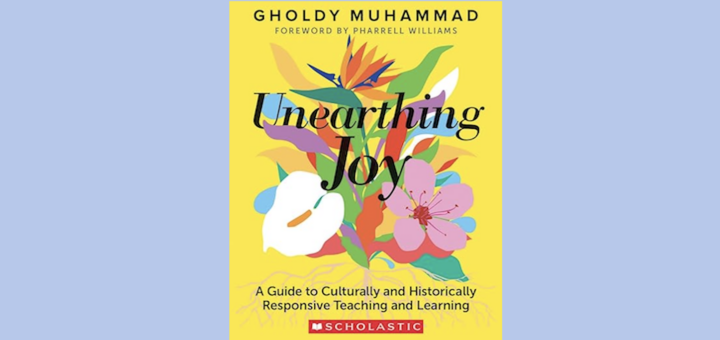
Gholdy Muhammad’s Unearthing Joy offers ways to elevate meaning, reflection and joy so readers can offer cultural and historically responsive teaching most effectively. Sarah Cooper calls it “one of the most beautiful, inspiring, actionable books about pedagogy I’ve ever read.”
The authors of Welcome to Reading Workshop explain why student work in small groups is not just one of many teaching options but an essential everyday strategy to reduce teacher-student ratio, personalize learning, give students a voice, review, reteach, and apply new learning.
Kelly Owens suggests ways to promote more engagement and motivation in class by using a HEAD, HEART, HANDS lens. She includes her team’s strategies for creating a student-centric learning environment, increasing opportunities for self-reflection, and decluttering the classroom.
Lauren Buell’s 8th grade ELA team works with students on a comprehensive unit that helps all participants develop speaking, listening, writing, reading and life skills as they prepare end-of-year TED-style talks. She shares the unit’s impact once students enter high school.
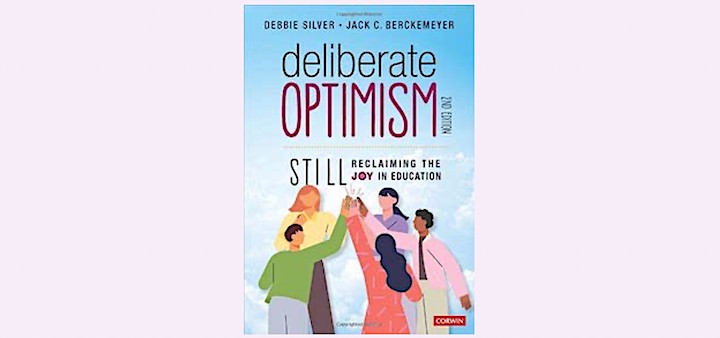
Given the challenges educators are facing today, Silver and Berckemeyer’s new edition of Deliberate Optimism could not be more timely. Kathie Palmieri finds lots to like, including a new focus on mental health, Silver’s humor, and the message that teachers “have to take our power back.”
Scaffolding strategies need to be used strategically, writes depth of knowledge expert Dr. Karin Hess. A strategy intended to support executive functioning or language development may not be effective for deepening content knowledge and thinking. See her tips and tools.
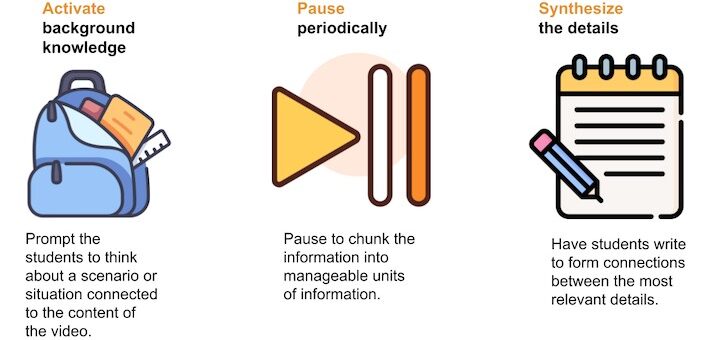
Explainer videos are challenging for multilingual learners because of the dense academic language, the rapid speaking pace and the large amount of content covered. Language specialist Tan Huynh shares strategies he uses to help MLs maximize the ‘learning gold’ videos offer.
Recounting her visit from a grandfatherly apparition grabbed the attention of Stephanie Farley’s students and launched a study of storytelling. Putting “stunt teaching” into action – sometimes with colleagues – builds engagement and opens the door to choice, challenge and play.