Humanizing the Past with Historical Fiction
By Kasey Short
 Historical fiction texts offer students a window into the past by centering engaging narratives in historical settings. They’re often read in English classes as whole class novels or chosen by students to read independently and can be used for cross disciplinary units in English and History.
By revealing and humanizing stories from the past, the historical fiction genre fosters curiosity, inspires empathy, stimulates critical thinking, and helps develop understanding of complex issues.
Experiencing history through a character’s perspective helps readers connect past events to their own lives and the present day. The stories also often inspire students to ask deeper questions, investigate the historical events featured in the fictional story, and separate fact from fiction to determine what historical knowledge can be gained from the fictional texts.
As students read historical fiction, they benefit from questions and activities designed to help them better understand the history, make connections, and reflect on their reading. Students also benefit from access to historical fiction that highlights diverse perspectives and lesser-known historical events
Suggested Questions for Historical Fiction
- How does the historical setting shape the main character’s experiences and decisions? How would the story be different in the present day?
- What historical events or figures are referenced in the story, and how do they impact the plot?
- How does this book challenge or reinforce what you already knew about this time and/or historical figures?
- If you were living in this time, how would your life be different? How would it be the same?
- What real-world connections can you make between this historical story and issues we see today?
- What choices did the author make to make the story feel authentic? What parts do you think might have been fictionalized?
- How does this story help you better understand the emotions and challenges people faced during this time in history?
- Did the author take creative liberties with history? If so, how did that impact the story?
- What historical details stood out the most, and how did they shape your understanding of the time?
- How do the main characters’ experiences compare to real people and events in history?
- Whose perspective is missing from the story, and how might including it change the narrative?
- Do the characters challenge or reinforce historical stereotypes?
- How does the author use language or dialogue to reflect the time?
- Did the author include historical documents, letters, or real-life accounts to add authenticity? If so how did those impact your understanding of the story?
Suggested Activities for Historical Fiction
- Write a series of diary entries from the perspective of a character in the book, incorporating historical details.
- Write letters between two characters discussing events in the book.
- Write a newspaper article as if you are a journalist reporting on an event in the story; include historical facts and fictional details from the story.
- If the book involves travel, create a map tracing a character’s journey with key historical events.
- Rewrite a key scene from the perspective of a different character.
- Research and present music from the book’s time and discuss how it connects to the story.
- While reading, write down questions you wonder about the historical events. Look them up to see what else you can learn.
- Choose one real event or person from the story to research. Create a chart to represent fact and fiction in the story.
Recommended Historical Fiction Novels
Rebellion 1776 by Laurie Halse Anderson
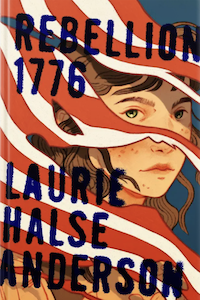 In 1776, Elsbeth is living in Boston, Massachusetts, and must navigate being separated from her father during the Revolutionary War while working for a family struggling with the impacts of war and smallpox inoculation. Elsbeth is a brave and kind character who finds her own ways to rebel with the backdrop of the Rebellion that formed the United States of America.
This book provides insight into historical moments such as the Siege of Boston while using countless “ordinary” moments of Elsbeth’s day-to-day life to show readers what it may have been like to live in Boston during 1776. Each chapter starts with a quote from a historical figure from the time period and connects to the story. Scheduled for publication April 1, 2025.
Will’s Race Home by Jewell Parker Rhodes
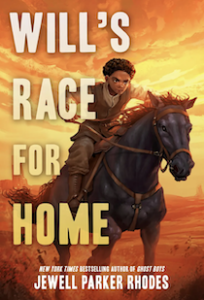 In 1889 Will is the first person in his family to be born free, and his father wants him to have a life also free from the oppression of share cropping. His father decides to risk the dangerous journey to travel from Texas to Oklahoma to claim land of their own during the land rush. During their perilous journey, they meet a former Union soldier who joins them.
They encounter challenges from the harshness of nature and racism as well as the emotional toll of being separated from the rest of their family. This is a fresh perspective on this time and readers will enjoy the adventure while learning from the complex moral choices the characters face.
What Fell from the Sky by Adrianna Cuevas
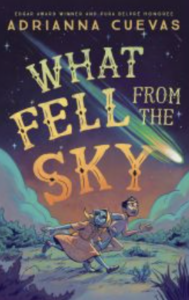 This is not traditional historical fiction; it is a mix of historical fiction and science fiction, and Cuevas weaves the two together magically. During the Cold War, Pineda is surprised when American solders parachute into his small Texas town as part of a training exercise (like one that really happened in preparation for a communist invasion). At the same time Pineda finds an alien, Louisa, in his barn who only wants to go home.
The book is filled with adventure while also showing the similarities between how Pineda’s mother, who is Cuban, tries to hide herself by not speaking Spanish in public and Louisa tries to hide that she isn’t human from the soldiers who are looking for her. It connects history, science fiction, and our world today in a fast-paced book that holds the reader’s attention.
The Enemy’s Daughter by Anne Blankman
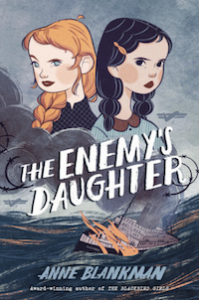 In 1915 Marta, a German girl hiding her identity because of WWI, is a passenger on the Lusitania who survives after the ship is attacked by a German submarine. She finds herself alone in Ireland where meets Clare, whose family takes her in, thinking she is Dutch. Marta, who first believed the Irish and English to be her enemy because of everything she was told about the war, realizes the value in getting to know people as individuals. It is a story of friendship, compassion, and the complexity of war with an interesting connection to the Lusitania.
More Historical Fiction Recommendations
Show Me a Sign by Ann Clare LeZotte
Ground Zero by Alan Gratz
One Big Open Sky by Lesa Cline-Ransome
Red, White, and Whole by Rajani LaRocca
The Night War by Kimberly Brubaker Bradley
The Partition Project by Saadia Faruqi
Nothing Else But Miracles by Kate Albus
The Lost Year by Katherine Marsh
A Seed in the Sun by Aida Salazar
Freewater by Amina Luqman-Dawson
The Night Dairy by Veera Hiranandani
Soul Lanterns by Shaw Kuzki
Stone River Crossing by Tim Tingle
Shooting Kabul by N.H. Senzai
Finding Langston by Lesa Cline-Ransome
Kasey Short (@shortisweet3) is the Middle School Director of Studies and an 8th Grade English Teacher and Advisor at Charlotte (NC) Country Day School. She loves to share ideas from her classroom and her leadership roles and writes frequently for MiddleWeb.
Kasey attended the University of North Carolina at Chapel Hill where she earned a bachelor of arts in middle school education with a concentration in English and history. She went on to earn a master’s in curriculum and instruction from Winthrop University.
Browse all of Kasey’s MiddleWeb articles here and follow her at Bluesky.